When Two Boutiques Sell the Same Dress, What Makes Yours Worth Buying?
TL;DR
You and three other boutiques bought the same dress at market, and you're all running the same vendor photo. A shopper with two tabs open can't tell the listings apart on the product itself, so she decides on price, or on whichever page actually told her something. The one thing your competitors can't copy is what you know from having the dress on your floor: how it really fits, where a customer in your town would wear it, and who it flatters. Put that into your listings and the same dress becomes worth buying from you. Ohavah turns your supplier invoices into ready-to-list Shopify products in minutes, so the hours you'd lose to data entry go into the part only you can write.
A woman has your product page open in one tab and another boutique's in the other, showing the same dress. You both bought it off the same line at market, you're both running the vendor's lookbook shot, and on her screen the two listings are nearly identical, down to the model and the plain studio background. She isn't being disloyal. She just can't see a reason to pick one over the other, so she sorts by price, or she buys from whichever page bothered to tell her something she couldn't already see in the photo.
This isn't a rare matchup. Most small boutiques buy from the same few hundred wholesalers, at the same regional markets and on Faire, so a strong style lands in dozens of stores in a single season. Your customer knows it too. She's seen the dress on three other shops' Instagram, and she can reverse-image-search the vendor photo in about four seconds. Competing on having the dress stopped working the moment everyone else had it.
Don't get pulled into the price race
When the product is identical, the lazy way to stand out is to be the cheapest, and it's a trap. Knock ten dollars off and the boutique across the state does the same, and now you've both trained the same shopper to wait for the markdown. You've given up margin on a dress that was selling fine, and you still haven't given her a reason to come back for the next one. Discounting early teaches your customer to never pay full price, and on a style half the internet is carrying, it's a race with no finish line.
There's a better way to stand out than a markdown, and it starts with everything you already know about the dress that the vendor photo can't show.
The vendor sells the dress. You sell what you know about it.
Your competitor's identical page is missing the one thing you've got, which is that the dress has physically been in your store. You've had it on the rack, watched customers pull it into the fitting room, seen which ones walked out beaming and which ones put it back. That firsthand knowledge is the one asset a wholesaler can't ship to everyone, and it sorts into three things worth writing down.
Original try-on observations
The vendor photo shows the dress on one model, styled once, under perfect lighting. Your floor has seen it on actual customers, and that's where the useful detail lives. Does the waist sit higher than it looks? Does a size medium run roomy through the hips, or snug across the chest? Is the fabric thinner in person than the glossy shot suggests, so it needs a slip? Does it wrinkle the second someone sits down, or shake out fine?
Write those down the way you'd say them out loud to a customer in the fitting room. "Runs about a size large, so size down if you're between." "The rayon is soft but it's thin, you'll want a nude seamless underneath." "Hits mid-calf on our 5'4" associate, right at the ankle on someone 5'9"." None of that is on the line sheet or in the vendor's copy, and no other store carrying this dress will have written it unless they did the same work. It's the online version of what your best sales associate knows that your website doesn't, and it's the single fastest way to make a shared product feel like yours.
Local occasion ideas
A national brand's product description has to work for every customer in every town, so it says nothing specific. You don't have that problem. You know your customer, and you know what's actually happening where she lives.
Tell her where the dress fits into her real calendar. If you're in a college town, it's the dress for parents' weekend dinner and the alumni tailgate. In a small Midwest city, it's what she wears to the fall wedding season that runs every Saturday from September through October, or to the Christmas walk downtown. Name the restaurant everyone goes to for an anniversary, the venue that hosts half the local showers, the festival that takes over Main Street in October. A shopper reading "perfect for date night" has heard it a thousand times. A shopper reading "this is the dress for dinner at the vineyard before it gets cold" can picture herself in it on Friday. That specificity is the same move that lets one piece sell as three different occasions, except here it also tells her that you actually live where she lives.
Honest styling advice
The surest way to sound different from every other store running this dress is to tell the truth about it. The vendor copy will never say a word against the product. You can, and it's exactly what earns the sale.
Tell her who it flatters and who should maybe skip it. "If you're busty, the surplice front gaps a little, so you'll want a cami under it." "This one's cut for a longer torso, so if you're petite the waist seam might land low." Then tell her how to style around the quirks: the belt that fixes the waist, the booties that balance the length, the jacket that takes it from the office to dinner. That styling nudge is also how a single dress turns into a two- or three-piece sale, which the price-cutter across the state never gets because she led with a coupon instead of advice. Honesty like this is the whole reason product knowledge beats pushy selling. A customer who trusts that you'll tell her when something isn't right for her believes you when you say this one is.
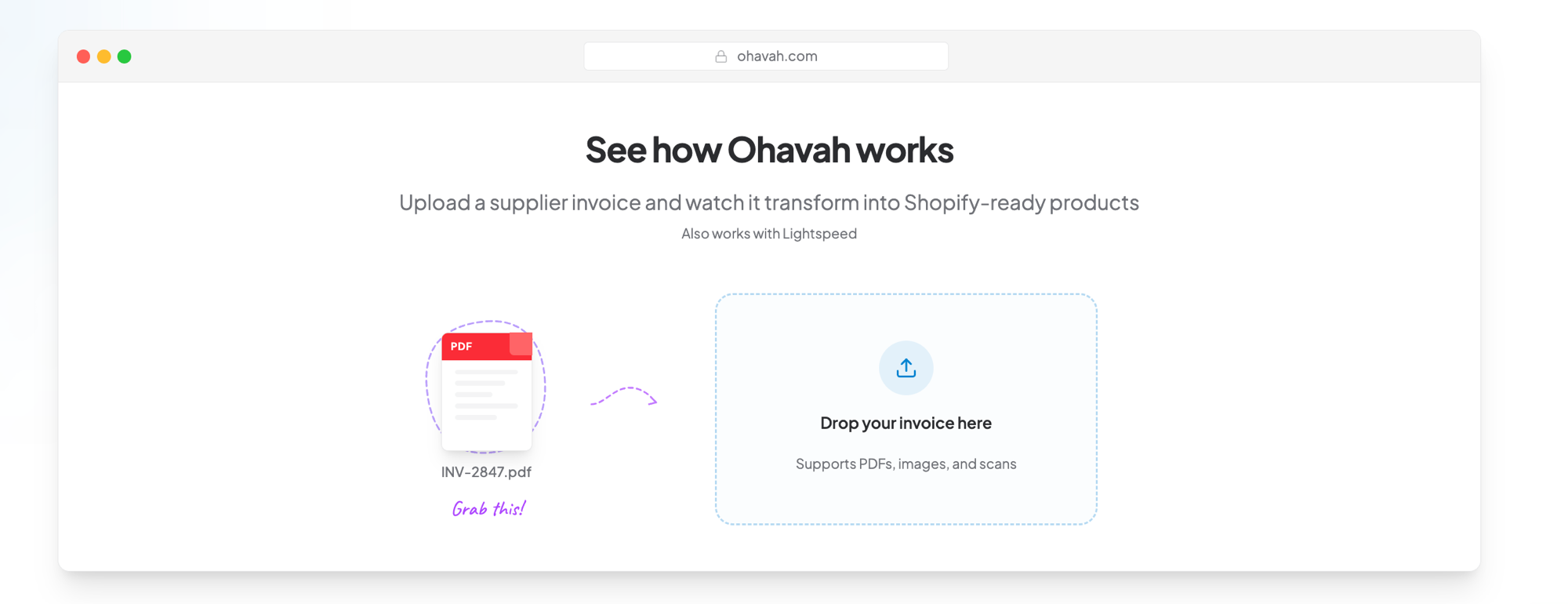
Find and prepare the product images for the styles you ordered
Enter a style number or upload your PO, and Photo Finder pulls the product images for your order, ready to add to Shopify.
 Dianna · Mainstream BoutiqueSays the photo feature saves time and gives her more face-to-face time with customers.See Dianna’s story →
Your point of view shows even on the vendor's photo
Plenty of boutique owners assume that using supplier photography means their store looks interchangeable, so the standout brands must be the ones shooting everything in-house. Shooting your own product is wonderful when you have the time, and most owners don't, not during a season when three shipments land a week. You don't need a different photo to have a different point of view, because the words wrapped around the photo do most of that work.
Take the exact same vendor image the other store is using and put your voice next to it. Your title can name the thing your customer calls it instead of the vendor's style code. Your first line can be the try-on tip, not the fabric content. Your description can walk her through the occasion and the styling the way you would on the floor. Same pixels, completely different page, because yours reads like a person who has seen the dress and hers reads like a catalog. When you pull supplier product images for your listings, you're getting the raw material fast so you can spend your energy on the part that's actually yours. Even small touches land here, like giving the vendor's color names a translation a shopper understands, so "wheat" becomes "warm oatmeal, reads neutral with everything."
Where the time for any of this comes from
All of this takes the one thing a boutique owner never has during a busy season, which is time. And the hours usually vanish into the least valuable part of the job. When every shipment means retyping line items into a spreadsheet, keying in each size and color and price before the product is even listed, the writing is what gets cut. The dress goes live with the vendor's three-word description because you're already onto the next invoice, and it ends up looking exactly like everyone else's listing for the same dress.
Ohavah takes the data entry off your plate. Upload the supplier invoice and it turns the whole thing into Shopify-ready products in minutes, with the variants, SKUs, and pricing filled in, and Photo Finder pulls the product images for the styles you ordered. The afternoon you'd have spent typing becomes an afternoon you spend adding the try-on notes, the local occasion, and the honest styling advice, the three things that make the same dress worth buying from you instead of the shop two tabs over.
Check us out on socials
Boutique owners saving time and having more fun.
Boutique owners describe what moving off manual entry freed them up for over on our customer stories. The theme is always the same: the hours go back to the floor, the customers, and the work software can't do.
Sell the dress only you can describe
You were never going to win by being the only one who carries the dress, because you're not, and your customer already knows it. You win by being the only one who tells her it runs large, that it's the dress for the vineyard dinner in October, and that she'll want a cami under the surplice front. That's knowledge you earn by having the thing in your store, and it's the one part of your listing no competitor can copy off the same line sheet.
Try Ohavah free for 7 days and turn your supplier invoices into ready-to-list products in minutes, so the time you save goes into the words that make your version of the dress the one she buys.
Related next steps
DiannaMainstream BoutiqueSays the photo feature saves time and gives her more face-to-face time with customers.