One Sweater, Three Occasions: Merchandising for the Holiday Calendar
TL;DR
The holiday stretch isn't a single occasion, it's a run of them, and each one carries its own dress code, Thanksgiving at the in-laws', the office party, a slow Saturday of errands. You don't need more inventory to sell into all of it, you need to show one good piece styled three ways so a shopper sees three reasons to buy instead of one. Build occasion-based collections out of what you already bought, each with a short styling note that answers "where would I wear this," and you turn the same rack into a Thanksgiving story, a party story, and a weekend story. Ohavah builds your product catalog straight from the supplier invoice, so once your holiday buy is listed, grouping those pieces into occasion collections is a quick sort instead of a data-entry project.
Turn supplier invoices into products instantly
Skip the manual data entry. Upload a PDF, get ready-to-import products.
A shopper walks in the first week of December carrying a whole month in her head. There's Thanksgiving already behind or ahead of her, a work party with a vague "festive" dress code nobody can define, a family dinner, a New Year's thing, and the ordinary weekends in between where she still wants to look like she tried. She's shopping for a whole season rather than a single outfit, and most stores meet her with a rack of nice individual pieces and leave the hard part, figuring out where each one actually fits, entirely up to her.
Sales leak out of that gap. A customer who can picture one occasion for a sweater buys it if the price is right, while a customer who can picture three occasions for the same sweater buys it faster, feels better about spending the money, and often grabs the thing you styled it with. The piece didn't change, only the number of reasons to own it did.
The holiday calendar is really several dress codes
The mistake is treating "holiday" as one merchandising theme, all sequins and velvet in the front window. Your customer's actual December is a set of very different rooms, and each one has its own unspoken rules:
- Thanksgiving and family dinners. Warm, comfortable, a touch nicer than everyday but nothing that says she's trying too hard in front of relatives. Room for a big meal. This is soft knits, easy dresses, good denim dressed up.
- The office party. Festive but still walking back into work on Monday, so nothing she'll regret in the group photo. A little shine, a blazer, a top that reads "party" without a costume.
- Weekend and casual outings. Errands, coffee, the low-key get-together. She wants to look pulled together without effort, which is layering and comfort with one considered detail.
The same customer moves through all three inside a two-week span. If your floor only speaks to the sparkly version of the holidays, you've priced yourself into one of her three occasions and left the other two on the table.
Style one piece for all three
Here's the move that costs nothing and changes how a rack sells: take one versatile piece you bought plenty of, and show it styled for each occasion, side by side. A single ribbed sweater is the easy example.
- For Thanksgiving, over a satin midi skirt with boots and gold hoops. Comfortable enough for seconds, put-together enough for photos.
- For the office party, tucked into wide trousers with heels and a statement earring, sleeves pushed up. Same sweater, suddenly dressed.
- For the weekend, with straight jeans, white sneakers, and a crossbody. The version she'll actually reach for on Saturday.
Three looks, one SKU, and the shopper stops seeing "a sweater" and starts seeing "the sweater I'll wear all month." You're doing the imaginative work she'd otherwise have to do herself, and that's exactly the taste-maker role that turns a nice piece into a whole purchase. It also naturally sells the pieces around it, since the skirt, the trousers, and the jeans are all right there in the story. This is the same idea as turning a rack into an outfit story, pointed at the specific occasions your customer is dressing for this month.
You can do this on the floor with three mannequins or a styled table, and you can mirror it online with three photos of the same piece in three contexts. Either way the message is the same: one purchase, covered for the season.
Build occasion collections from what you already bought
The floor display gets a customer who's standing in front of it. Online, the version of this that scales is an occasion-based collection, a group that pulls together pieces you already carry under a heading a shopper is actually thinking in: "Thanksgiving Outfits," "Office Party," "Casual Weekend," "Under $75 Gifts."
The key thing is that this needs no new inventory. You're re-sorting the buy you already made into the way your customer shops in December. A single sweater can, and should, live in more than one of these, because it really does work for more than one occasion. Set the collections up like this:
- Name them by occasion, not by category. "Thanksgiving" pulls a shopper in far better than "Sweaters" does, because it matches the question in her head.
- Let pieces appear in multiple collections. The versatile sweater belongs in Thanksgiving and Weekend both, and that overlap is what you're after.
- Keep each collection a complete look, not a pile. A few tops, the bottoms and layers that go with them, and a shoe or accessory, so the shopper can see the outfit, not just the parts.
If your product tags and collections are already tidy, assembling these is fast, which is one more reason to keep tags and collections consistent as inventory comes in rather than inventing structure per product. And because holiday stock rarely lands in one shipment, occasion collections give each staggered drop an obvious home the day it arrives.
Write the styling note that does the selling
A collection is a start, but the piece that makes it feel like your store and not a search filter is a short styling note. One or two lines per look, in your voice, telling her where to wear it and what to pair it with. "Wear it to the family table with boots now, then to the office party in heels later, the sweater does double duty." That sentence is your best sales associate talking, and it's the thing your website usually leaves out that your floor does naturally.
Styling notes do two jobs at once. They answer the "where would I even wear this" hesitation that kills online sales, and they hand the customer the add-on without a hint of pressure, because you're describing an outfit, not upselling a cart. A shopper reading "pairs with our high-waisted trousers" is halfway to adding the trousers on her own.
Where the manual work usually piles up
All of this assumes your holiday buy is already listed, tagged, and searchable, and that's exactly the part that eats a boutique owner's December. When every shipment means retyping line items into a spreadsheet before you can even think about collections, the occasion-merchandising work is the thing that gets skipped, because you're still buried in data entry when the shopping's already started.
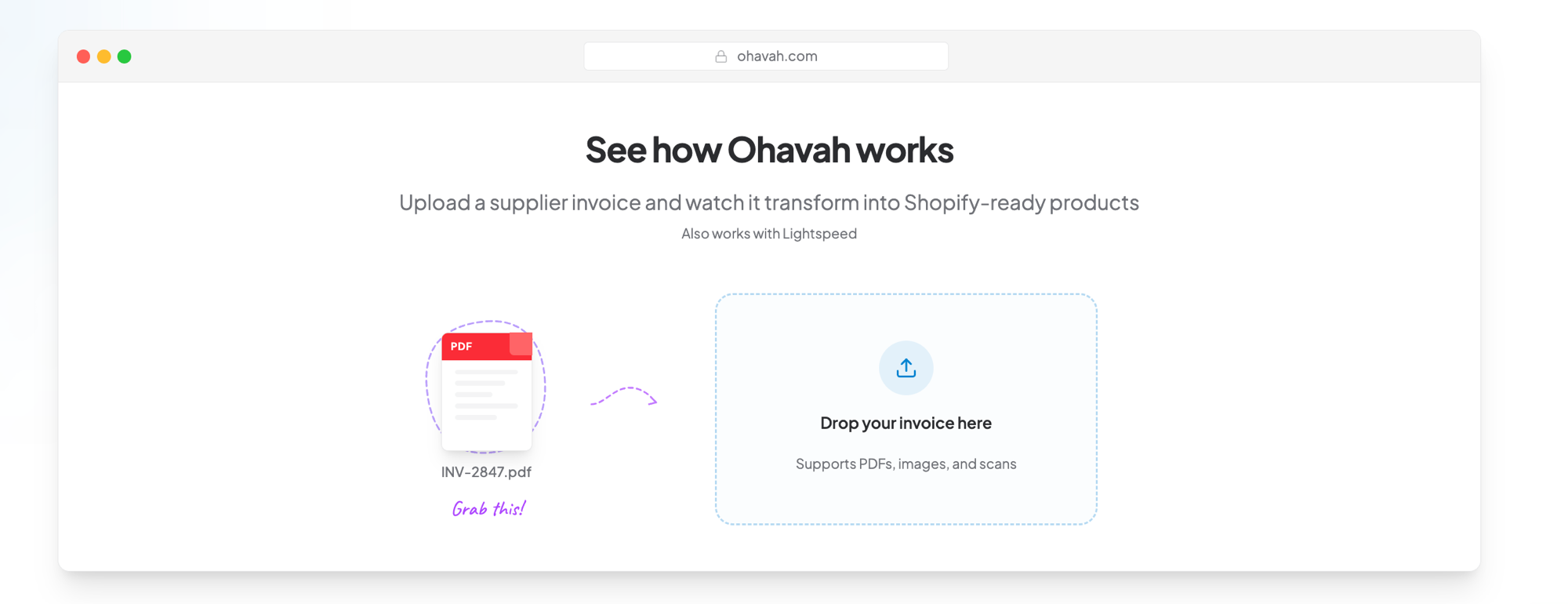
That's the friction Ohavah takes off your plate. When you turn a supplier invoice into products, it reads each line item off the invoice, colors and sizes included, and builds your Shopify-ready product list in minutes instead of an afternoon. With the catalog already built, spinning up "Thanksgiving Outfits" and "Office Party" is a quick grouping job on top of data that's already there, not a from-scratch typing marathon, so you spend your December styling instead of keying.
Boutique owners share what moving off manual entry freed them up to do over on our customer stories, where the season stops being a data-entry scramble and starts being the fun part again.
Sell the season, not the piece
The holidays reward the store that thinks in occasions, because that's how the customer is already thinking. Show her the one sweater three ways, group your buy into the moments she's dressing for, and add the styling note that tells her where each look belongs, and you've turned a single rack into a Thanksgiving sale, a party sale, and a weekend sale without buying a thing extra. The inventory was always going to be there. The only question is whether she can see all the ways to wear it.
Check us out on socials
Boutique owners saving time and having more fun.
Try Ohavah free for 7 days and turn your supplier invoices into ready-to-list products in minutes, so your holiday buy is listed and sortable the day it lands and you can spend the season merchandising instead of typing.