Why Sets and Layering Increase Average Order Value
TL;DR
The fastest way to raise your average order value without discounting or restocking is to stop selling single pieces and start selling sets and layered looks. A matching set answers the "what do I wear it with" question before the customer asks it, and a layering piece is the lowest-commitment add-on in the store, so both slide into the cart without any pressure. The stores that do this best aren't pushier than everyone else, they're just the taste-maker the customer trusts to assemble the whole thing. Four ideas do most of the work:
- Sell the set, not the separate, and price it so the whole reads as easy
- Use layering as the no-pressure add-on that fits any season
- Position your store as the taste-maker who does the pairing
- Keep the full set shoppable online, so the second and third pieces sell after she leaves
Ohavah gets new arrivals listed the same day, so every piece of a set you build in-store is live on your website too, not stuck in a back-room box while the customer's interest cools.
Turn supplier invoices into products instantly
Skip the manual data entry. Upload a PDF, get ready-to-import products.
Two customers walk into the same boutique on the same afternoon. The first finds a linen top she likes, buys it, and leaves. The second finds the same top, and the associate pulls the wide-leg trousers that were made to go with it, adds the light cardigan for the over-air-conditioned office, and sends her home with all three. Same store, same starting piece, same amount of floor time. One receipt is thirty-eight dollars and the other is a hundred and forty. Nothing about the second sale felt like a hard push; the customer just left with an outfit instead of a fragment of one.
That gap is where average order value actually lives, and it's almost entirely a merchandising and styling choice rather than a traffic or pricing one. You don't need more customers through the door or higher price tags to grow. You need each customer who's already committed to buying something to buy the pieces that naturally complete it, and sets and layering are the two easiest ways to make that happen.
The plain math of selling the set
Average order value, or AOV, is just your total sales divided by the number of orders. It's the number that tells you how much a typical customer spends per visit, and it's one of the few growth levers you fully control from inside the store. You can't force more people to walk in, and you can already know that raising prices is the riskiest way to grow. But moving a store's AOV from one item per sale toward two or three is ordinary work any team can do.
Here's why sets do the heavy lifting. When a customer buys a single statement piece, she's taking home a small problem, something to style on her own against whatever's already in her closet. When she buys a coordinated set, she's taking home a solved problem, a look she can put on without thinking. The set is worth more to her than the sum of its pieces because it comes with the styling already done, and that's exactly why she'll pay for the whole thing rather than hunting for the match somewhere else later.
Layering is the easiest add-on in the store
If sets are the headline, layering pieces are the quiet workhorse of a higher AOV, because a layer is the lowest-commitment thing you can put in front of a customer. A jacket, a cardigan, a vest, or a lightweight duster doesn't ask her to rethink the outfit she already chose. It just finishes it, and it works across seasons, which means a layer is rarely a hard no. Most customers will at least try it on, and a layer on the body sells itself far better than a layer on the hanger.
Layering also does something useful to how a look reads. A single dress is one decision. That same dress with a denim jacket for daytime and a wrap for evening is suddenly two outfits from one purchase, and the customer can feel the versatility, so the add-on stops looking like an extra and starts looking like a multiplier on what she's already buying. Train your team to reach for the layer every single time, the same way they'd bring the whole look to the fitting room instead of one piece, and you'll watch units per transaction climb without a word about spending more.
A few things to keep in mind when you're building sets and layers to sell, and treat these as starting points to test in your own store rather than rules, since every floor behaves a little differently:
- Merchandise the set together, not in separate departments. If the top lives on one wall and the trousers on another, you've handed the pairing job back to the customer. Keep the pieces of a look within arm's reach of each other so the set reads as one idea.
- Show the layer on the mannequin, not folded on a shelf. A styled body communicates "this goes with that" instantly. A stack of cardigans communicates "here is a pile of cardigans."
- Price for the whole where you can. A gentle set price or a "complete the look" nudge lowers the resistance to buying all of it at once, and it makes the two-or-three-piece purchase feel like the sensible default rather than the splurge.
- Keep the palette tight. Pieces that share a color story look intentional together, which is half of why a set feels like a set instead of two things that happen to be near each other.
Be the taste-maker, not just the shopkeeper
Here's the part that ties it all together. The reason a customer buys the whole set from you isn't the price or the proximity, it's that she trusts your eye. More and more, shoppers aren't looking for a rack to dig through, they're looking for someone to tell them what's good and what goes together, and a boutique that positions itself as the taste-maker rather than the warehouse is exactly who they want to buy from. When your store has a clear point of view, assembling a set stops feeling like a sales tactic and starts feeling like a recommendation from someone who knows.
This is an advantage you have over big retailers and endless online scroll, and it's worth leaning into hard. A customer facing a wall of options mostly feels decision fatigue, the well-documented drain that sets in when people are asked to make too many choices in a row, and she'll often buy less or nothing at all rather than keep deciding. A curated set is a rest from that, because you've already made the hard calls about what works with what, and all she has to do is say yes to a look you've vouched for. The taste-maker's job is to hand her that confidence, and the clothes come along with it.
Being that person is also how one-time shoppers turn into regulars. When a customer learns that your store reliably hands her a finished look she feels great in, she stops comparison-shopping and starts coming back for your judgment, which is the difference between a loyal customer and a one-time transaction. Nobody discounts their way to that kind of loyalty.
Keep the whole set shoppable online, too
There's a predictable place a beautifully built set leaks money, and it's after the customer walks out. She loved the full look but bought the dress tonight and figured she'd come back for the jacket. Or she posted the outfit and a friend wants the entire thing. If the companion pieces aren't live on your website, the set you assembled so carefully on the floor quietly falls apart the moment she leaves the store.
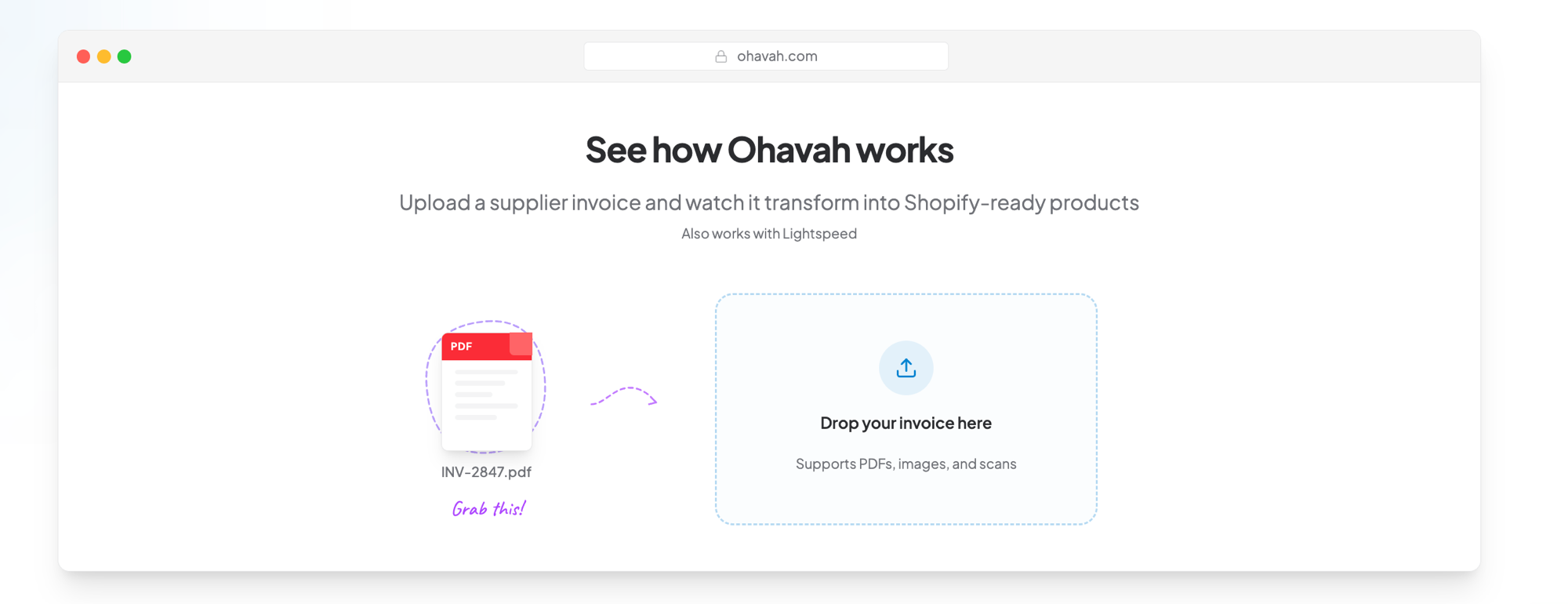
Your online store should carry the same sets your floor does, which means the new arrivals in those sets have to actually be listed and buyable. For most boutiques that's exactly where it breaks down, because photographing, naming, pricing, and uploading a fresh shipment eats hours, so the pieces you're merchandising into sets this week often don't appear online until next week, well after the moment has passed. Your online store is a second location, and it should stock the same complete looks your floor does. Ohavah turns the supplier invoice for a new shipment into ready-to-publish Shopify listings in minutes, so the trousers that complete tonight's set are online and buyable before the customer's even home, and the looks you stage on the floor have a matching home on your site.
Sell the look, grow the receipt
Raising average order value doesn't take a bigger marketing budget or a price increase that scares off the customers you have. It takes the discipline to stop presenting single pieces and start presenting finished ideas: the set that solves her outfit, the layer that finishes it, and the point of view that makes her trust all of it. Do that on the floor, keep those same looks live online, and the average sale grows on its own, one completed outfit at a time.
Try Ohavah free for 7 days and keep every set you build in-store shoppable online the same day.