5 Easy Ways Boutiques Can Improve Margin Without Raising Prices
TL;DR
Five ways to improve your margin that don't involve touching your price tags:
- Negotiate better terms with the vendors you already buy from
- Protect your full-price selling window so fewer units hit the markdown rack
- Cut the freight and operational costs hiding inside your cost of goods
- Rebalance your buy toward the categories that actually earn their keep
- Get new arrivals selling on every channel the day they arrive
Ohavah helps with #5 by turning supplier invoices into Shopify-ready product listings in minutes, so new inventory starts selling while demand is at its peak.
Turn supplier invoices into products instantly
Skip the manual data entry. Upload a PDF, get ready-to-import products.
When margins feel tight, the first instinct is to raise prices. Sometimes that's the right move, but it's also the riskiest one. Your customers notice, your competitors notice, and if you've trained shoppers on a certain price point, moving it can cost you more in lost sales than it gains per unit.
The good news is that price is only one side of the margin equation. The other side, what each sale actually costs you, has far more room to work with than most boutique owners realize. Here are five places to look.
1. Negotiate with the vendors you already have
Most boutique owners negotiate exactly once with a vendor, at the opening order, and then never again. Meanwhile your order history keeps growing, and order history is leverage.
If you've been buying from a brand for a few seasons, you're a proven account. Ask for net-60 payment terms, or net-30 if you've been prepaying. Marketplaces like Faire already offer net-60 as standard for qualified retailers, so the precedent exists and reps know it. Better terms aren't a discount on paper, but they change your cash flow math completely; you can sell through a good chunk of an order before the invoice is due, which means less borrowing, less stress, and more open-to-buy for winners.
Then go after the line items around the product. Ask about free freight thresholds, and if your usual order lands just under one, bump it to cross the line. Ask whether there's a discount for ordering during pre-book versus in-season. Ask if they'll cover or split the cost of damages and short shipments instead of making you file claims for store credit.
None of these conversations are confrontational. Reps expect them, and the answer is yes more often than you'd think. A 2-3% improvement in your effective cost of goods flows straight to your bottom line without a single price tag changing.
2. Shrink your markdown rate
Here's a number worth knowing: what percentage of your inventory sells at full price?
For a lot of boutiques the honest answer is somewhere between 40% and 60%, and every unit that sells below full price is margin you bought and then gave away. If your average markdown is 30% and a third of your inventory takes one, your blended margin is several points below what your pricing says it should be.
The fix usually isn't discipline at the markdown rack; it's everything that happens before a product gets there. Products take markdowns because they ran out of selling time, and they run out of selling time because they were buried on a back rack, never posted to Instagram, or didn't make it onto the website until three weeks after arrival. We wrote about this pattern in detail in why discounting too early hurts your store; the short version is that most "slow" products were never given a fair chance to sell.
Give every arrival a full-price window of at least six weeks with genuine effort across every channel. Restyle it, feature it in your email, bundle it with a bestseller. Every unit you rescue from the markdown rack is pure margin recovered.
3. Audit the costs hiding inside your cost of goods
Your wholesale price isn't your full cost. By the time a top lands on your sales floor it has picked up inbound freight, packaging, credit card processing, and shrinkage, and those costs are quietly eating 3-8% of your revenue.
A few places to look:
Inbound freight. If you're placing small, frequent reorders with the same vendor, you're paying for shipping over and over. Consolidate where you can, and route orders to hit free-freight minimums.
Payment processing. If you're on Shopify and Shopify POS, your card rates are set by your plan tier, and the math on upgrading is worth checking. Moving from Basic to the Shopify plan lowers your rate on every single transaction, and once you're processing around $40,000-50,000 a month, the savings typically cover the higher subscription cost on their own. If you're on a separate processor for in-store sales, that's where a competing quote can still knock off a few tenths of a percent.
Packaging. Branded tissue, ribbon, and custom bags are lovely, but check what they cost per transaction. There's often a version that keeps the experience at half the cost.
Shrinkage and damage. Count it instead of guessing. If certain vendors consistently ship damages, that's a negotiating point for tip #1.
4. Rebalance your buy toward what earns its keep
Not every category in your store produces the same margin, and the gap is usually bigger than it feels. Dresses might turn fast but take heavy markdowns at season's end. Jewelry and accessories might sell slower per visit but almost never get discounted and carry a higher markup to begin with.
Pull your sales by category for the last two seasons and look at maintained margin, what you actually kept after markdowns, not the margin you priced at. Then look at your open-to-buy and ask whether your dollars are flowing to the categories that earn the most or the ones you personally enjoy buying.
This is the same data discipline that helps you decide when to reorder versus move on at the product level, applied one level up. Shifting even 10% of your buy from your weakest-margin category to your strongest one improves your blended margin without changing a single price, and it pairs naturally with avoiding the classic buying mistakes before market.
5. Sell new arrivals while demand is at its peak
A product's best chance of selling at full price is in its first few weeks, when it's fresh, on-trend, and exciting to your customers. Every day it spends in the back room waiting to be entered into your system is a day taken off the front of that window, and the days at the front are worth more than the days at the end.
This is where speed becomes a margin strategy. If new arrivals hit your sales floor on Monday but don't appear on your website until the following week, your online customers and the locals who browse your site and Instagram before driving over never see the product during its peak. By the time it's live everywhere, you're closer to markdown territory and the clock has been running the whole time. Your online store is effectively a second location, and every shipment it sits unstocked costs you full-price sales you can't get back.
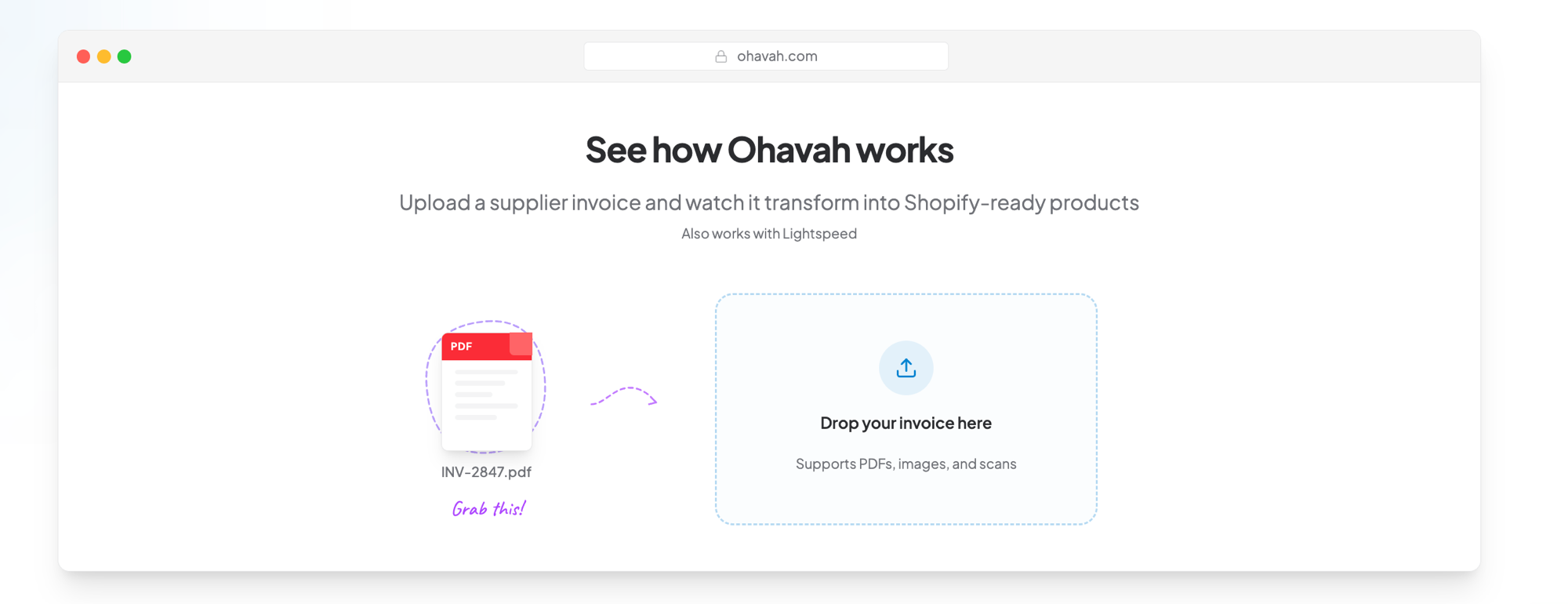
The bottleneck is almost always data entry. Typing in styles, variants, prices, and tags for a 60-piece order takes hours that boutique owners rarely have on receiving day. Ohavah removes that step by turning your supplier invoices into Shopify-ready import files, with variants, pricing, and tags already set up. New arrivals can be live online the same day they hit the floor, selling at full price while customer interest is highest.
Margin is built in the details
None of these five moves is dramatic on its own. Better terms might be worth two points, fewer markdowns another three, faster listing another two. Stacked together, that's the difference between a store that's always tight on cash and one that funds its own growth, and your customers never see a higher price tag.
Try Ohavah free for 7 days and start giving every new arrival its full selling window.