The Biggest Buying Mistakes Boutiques Make Before Market
TL;DR
The biggest buying mistakes boutiques make before market:
- Going in without a firm budget
- Chasing new brands instead of reordering proven sellers
- Buying too deep in one category
- Ignoring your sell-through data
- Not planning how you'll get new products online
- Skipping the post-market review
Ohavah helps with #5 by turning your supplier invoices into ready-to-import product listings for Shopify, so the energy from market actually translates into revenue.
Turn supplier invoices into products instantly
Skip the manual data entry. Upload a PDF, get ready-to-import products.
You just got back from market. Your car is full of lookbooks, your phone is full of photos, and your credit card is wondering what happened. You wrote orders for eight new brands you'd never heard of two days ago, plus reorders for your staples, plus a few "stretch" buys that felt right in the moment.
Now you're home, the adrenaline has worn off, and the math is starting to sink in. Sound familiar?
Market week is genuinely fun. That's part of the problem. The atmosphere, the new collections, the reps who remember your name and pull out their best pieces for you. It's designed to get you excited, and excitement isn't a great purchasing strategy.
Here are the mistakes we see boutique owners make over and over, and what to do instead.
Going in without a number
This is the big one. You'd never run your store without tracking your daily sales, but plenty of boutique owners walk into market without a firm buying budget.
"I'll just see what looks good" isn't a strategy. It's how you end up $15,000 deeper than you planned, with inventory that takes six months to move.
Before market, sit down with your numbers. Look at what you sold last season, what your cash flow looks like for the next 90 days, and what you actually need to fill gaps in your assortment. Set a dollar amount. Write it down. Tell your buying partner or your rep. Having a number forces every order through a filter: does this fit, or am I just excited?
A rough formula that works for a lot of independent retailers: take your projected revenue for the season, multiply by your target cost-of-goods percentage (usually 45-55% for boutiques), and subtract what you've already committed. That's your open-to-buy. It's not a perfect science, but it beats vibes.
Falling for the shiny new brand
Every market has them. The booth with the beautiful display, the brand you've never seen before, the collection that photographs perfectly. You write a $3,000 opening order on the spot because the pieces are gorgeous and the rep is great.
Then the shipment arrives. Your customers have never heard of this brand. Nobody's searching for it. The pieces are beautiful, but they sit on the rack because nobody walked in looking for them.
New brands aren't bad. But there's a real cost to introducing an unknown label to your customer base. You're essentially betting that your taste alone will move the product, without the tailwind of brand recognition or customer demand.
A better approach: limit your "discovery" budget to 10-15% of your total buy. That gives you room to experiment without betting the season on it. And before you write that order, ask yourself whether your customer is actually looking for what this brand offers, or whether you're just drawn to it because it's new to you.
The brands that already sell well in your store? Those reorders are boring, but they pay the rent.
Buying too deep in one category
You love dresses. Your best-selling brand just released 40 new styles and every one of them is beautiful. So you order 25 of them.
Now 60% of your open-to-buy is tied up in dresses from one vendor. If that brand ships late, or if your customers shift toward pants this season, you're stuck.
Diversification isn't just a financial concept. It applies to your buy too. Spread your budget across categories, vendors, and price points. If one brand underperforms or ships late, the rest of your inventory keeps the store moving.
Before market, review your sales by category for the last two seasons. If dresses were 30% of your revenue, they should be roughly 30% of your buy, not 60% because you got excited at one booth.
Ignoring your sell-through data
Your POS system tracks what sells and what doesn't. Most boutique owners check this casually, but few bring structured data to market.
Pull a report before you go. Which styles sold out fast? Which ones ended up on the clearance rack? Which sizes move quickest? Which price points hit the sweet spot for your customer?
This data should drive your buying decisions. If you consistently sell out of mid-priced tops in sizes S-L within three weeks of receiving them, that's a signal. Buy deeper in that pocket. If statement jewelry over $80 consistently sits, stop buying it no matter how much you personally love it.
The Sunk Cost Fallacy is real at market. You see a brand you've carried for years, the relationship is good, but the numbers say the product isn't moving. Loyalty to a vendor that isn't performing costs you real dollars in missed opportunities with brands that would sell.
Not planning for the online side
You placed your orders. The shipments will start arriving in a few weeks. Then what?
A surprising number of boutique owners treat market buying and e-commerce listing as completely separate activities, if they think about the online part at all. The products arrive, they go on the floor, and eventually someone gets around to listing them on Shopify. "Eventually" might mean weeks.
Every day a product is in your store but not on your website is a day you're leaving online sales on the table. Your online store is your second location, and it only works when the shelves are stocked.
The gap between receiving product and getting it online is almost always data entry. Reading the invoice, building out product variants, setting retail prices from wholesale costs, adding tags and collections, formatting the CSV for Shopify import. For a single invoice with 30+ styles, that's 1-3 hours of work.
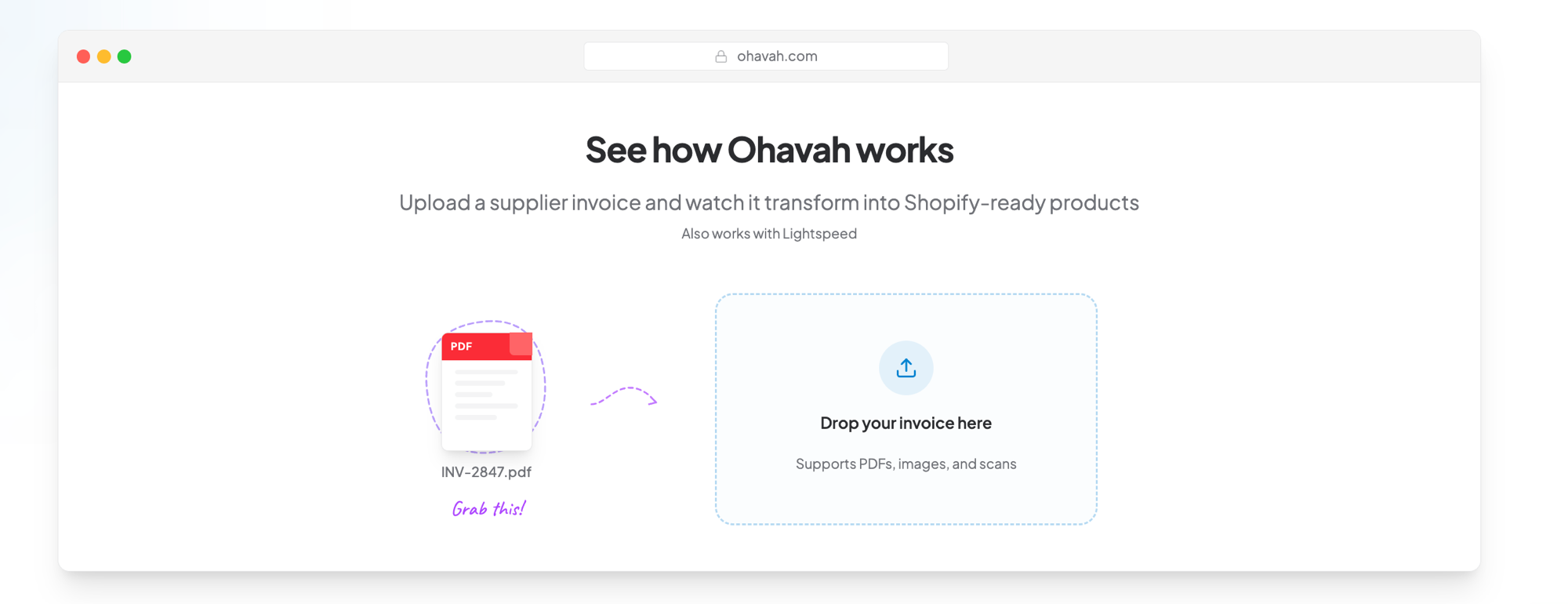
See how Ohavah turns your invoices into Shopify-ready listings in minutes. Upload the invoice PDF, set your markup rules, and download the import file. Your market buys can be live online before the hangtags are even sorted.
Skipping the post-market review
Market energy fades fast. By the time you're back in the rhythm of running your store, the details of why you bought what you bought are already fuzzy.
Within a week of getting home, sit down and review every order you wrote. For each one, note why you bought it, what category gap it fills, and what your sell-through expectation is. If something doesn't hold up in the cold light of your office, call the rep and adjust the order. Most vendors allow modifications within a window after market.
This review also sets you up to measure performance later. When the product arrives and starts selling (or not), you can compare the result to your original reasoning. That feedback loop makes you a better buyer over time.
A pre-market checklist
If you take one thing from this post, make it a habit of preparing before you walk through those market doors:
- Set your open-to-buy. Total budget, broken down by category.
- Pull your sell-through report. What moved, what didn't, what sold out too fast.
- List your reorders first. Proven sellers get funded before new discoveries.
- Cap your discovery budget. 10-15% of total buy for new brands.
- Plan for online. Know how you'll get new products listed. Ohavah can handle the invoice-to-listing conversion so your new buys are online within days of arriving, not weeks.
Market is one of the best parts of running a boutique. Walking in with a plan means you get to enjoy it without the post-market panic.