Why Deliveries Shift (and What Buyers Can Do About It)
TL;DR
Wholesale deliveries slip all the time, and a shipment that lands weeks late can wreck the selling window you bought it for. Most of it is out of your hands, but how you write your orders and how fast you react when product does land are very much in your control. The buyers who stay ahead of shifting ship dates do four things:
- Understand why deliveries move, so you can plan around it instead of being surprised
- Use start-ship and cancel dates to protect your floor
- Stagger deliveries so you're not betting everything on one shipment landing on time
- Get late product onto your floor and your website fast, to win back the time you lost
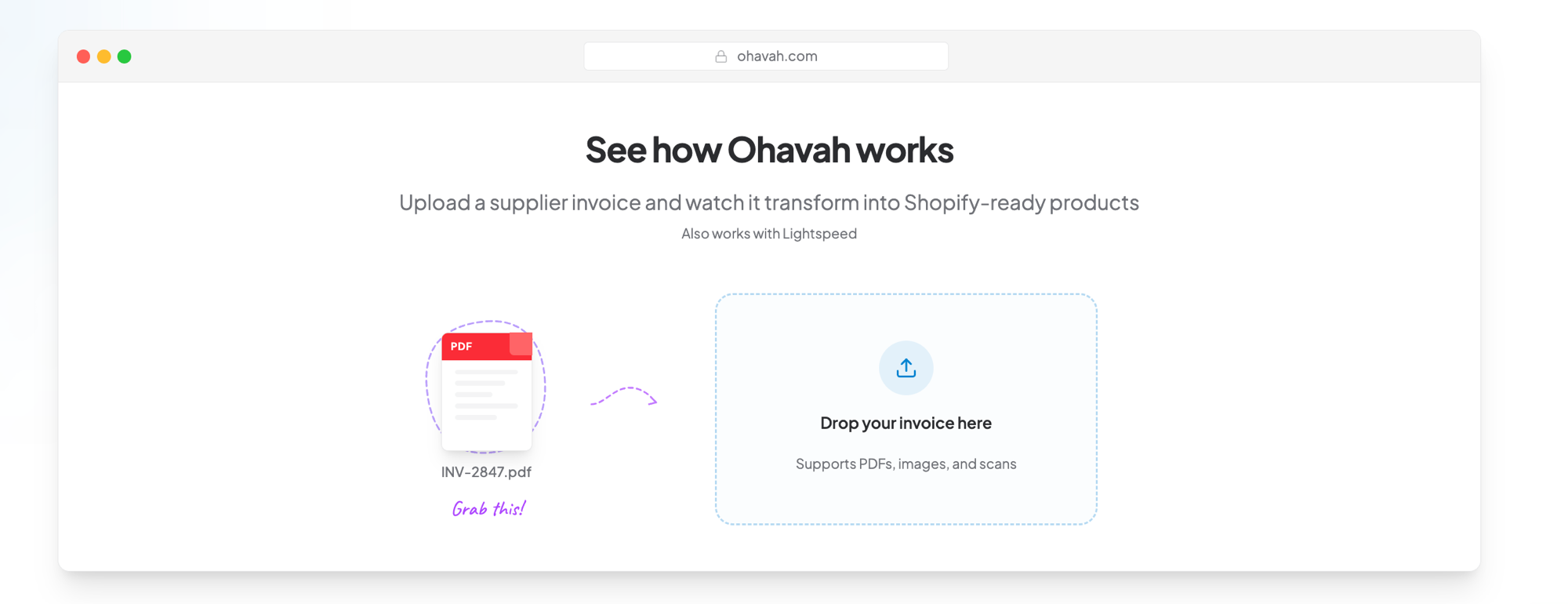
Ohavah helps most with that last point, turning the supplier invoice for a shipment into ready-to-publish Shopify listings in minutes, so when product finally shows up, you lose hours to selling instead of days to data entry.
Turn supplier invoices into products instantly
Skip the manual data entry. Upload a PDF, get ready-to-import products.
Every boutique owner knows the feeling. You bought a beautiful spring delivery at market in October, you planned your floor around it landing in February, and then it shows up in late March when the season is half over. Now you're trying to sell spring product against everyone else's spring product, with weeks less runway to move it at full price, and the markdowns start looming before the pieces have even been steamed. The order was right, the timing wasn't, and the timing is what determines whether that buy makes you money.
Shifting deliveries are one of the most frustrating parts of running a boutique, because they affect everything downstream and they're mostly caused by things you can't see. The good news is that while you can't control a factory in another country, you can control how you write your orders and how quickly you turn late product into sales, and those two things make a real difference.
Why deliveries shift in the first place
It helps to understand what's actually happening, because most delivery delays aren't your vendor being flaky. Wholesale brands are sitting at the end of a long chain, waiting on fabric mills, overseas factories, freight, and customs, and a holdup anywhere in that chain pushes everything behind it back. A brand that promised February delivery may be waiting on a fabric shipment that got stuck at a port, and there's nothing they can do but wait too.
There's also a structural reason small delays turn into big ones, and it has a name. The bullwhip effect describes how small swings in demand or supply get amplified as they travel up the chain, so a minor hiccup at the mill becomes a major delay by the time it reaches a boutique placing a small order. Add in the reality that you're rarely a big brand's top-priority account, and it's easy to see why your delivery is the one that slips. None of this is an excuse, but understanding it lets you plan like delays are normal, because they are.
Use your ship dates as a tool, not a formality
Most wholesale orders have two dates that boutique owners breeze past, and they're the single most important lever you have. The start-ship date is the earliest the brand can ship your order, and the cancel date is the point after which you have the right to refuse it. Together they define a delivery window, and that window is a negotiation, not a given.
Treat those dates as protection for your floor. If you're buying for a specific season or event, set a cancel date that reflects the last moment that product can still sell through at full price, and hold your vendors to it. A delivery that lands after its useful window isn't a late gift, it's a markdown waiting to happen and cash tied up in product you'll struggle to move. Writing tight, intentional windows is one of the buying fundamentals that separates owners who run their floor from those whose floor gets run for them, and it's closely tied to the planning mistakes boutiques make before market that quietly set up problems months later.
Stagger deliveries so one slip doesn't sink you
A lot of the pain from shifting deliveries comes from concentrating too much into a single drop. If your whole spring buy is set to land in one shipment and that shipment slips, your entire season slips with it. Spreading your buys across staggered delivery windows means a delay on one order doesn't leave your floor empty, and it keeps fresh product flowing in steadily instead of arriving in one overwhelming wall you can't merchandise fast enough.
Staggering also helps your cash flow, because you're paying for product closer to when you can actually sell it rather than floating a giant order all at once. It pairs naturally with knowing when to reorder versus move on, since a steady cadence of smaller deliveries gives you real sell-through data to act on before you commit to the next wave. The whole point is to stop betting your season on a single ship date you don't control.
Win back the time you lose when product lands late
Here's the part that's entirely in your hands. When a late shipment finally arrives, every additional day before it's selling is a day of an already-shortened window gone. A delivery that's three weeks late and then sits in boxes for another four days while you photograph, name, price, and type each piece into Shopify is closer to a month behind, and that's how late product slides straight into markdown territory. The delay you couldn't prevent gets compounded by the listing work you can.
This is exactly where you claw back time. Ohavah turns the supplier invoice for a shipment into ready-to-publish Shopify listings in minutes, so a late delivery goes from boxes to live and shoppable the same day instead of sitting in the back while the selling window keeps shrinking. You can't make the factory ship faster, but you can make sure that the moment product hits your door it's working for you, online and on the floor, capturing full-price sales before you're forced to discount. Getting late product selling immediately is one of the most direct defenses against the hidden cost of overstock, since the longer it takes to start selling, the more likely it ends the season as leftover.
The playbook
- Expect delays. The bullwhip effect and a long supply chain mean ship dates slip, so plan as if they will instead of being caught off guard.
- Write real windows. Set start-ship and cancel dates that reflect when product can actually sell at full price, and hold vendors to them.
- Stagger your buys. Spreading deliveries across windows protects your floor, smooths your cash flow, and keeps fresh product flowing.
- Move fast when it lands. Use Ohavah to get late shipments online the same day, so you win back the selling time the delay cost you.
You'll never fully control when product shows up, and chasing that is a losing battle. What you can control is writing orders that protect your floor and turning whatever lands into sales fast, so the ship date is the brand's problem and the selling is still yours.
Try Ohavah free for 7 days and turn every shipment, on time or late, into Shopify-ready listings in minutes.