What Your Best Sales Associate Knows That Your Website Doesn't
TL;DR
Your best sales associate answers the same fitting-room questions all day, how much a piece stretches, whether it's sheer, what bra works under it, where the hem lands, and what it layers with. Those answers are exactly the product details your online listings leave out, so an online shopper hits the same doubts with nobody standing there to resolve them. Write those answers down while the season is quiet, fold them into your descriptions, and you'll walk into holiday traffic with a website that closes the way your floor does. Ohavah turns each supplier invoice into ready-to-list products in minutes, which frees up the hours you'd otherwise spend on data entry to write the fit notes only your team knows.
Turn supplier invoices into products instantly
Skip the manual data entry. Upload a PDF, get ready-to-import products.
There's a conversation that happens fifty times a day on your floor and never once on your website. A customer holds up a sweater, gives it a little tug, and asks the associate standing next to her, "Does this stretch, or is it going to be tight across the shoulders?" She holds a blouse up to the light and asks if she can get away with a regular bra. She loves a dress on the rack and asks where it's going to hit, because she's five-two and everything's a maxi on her. Your associate answers every one of those without thinking, because she's had the piece on, she's seen fifty women try it, and she knows.
Online, that customer asks the same questions. She just asks them in her own head, gets no answer, and closes the tab. The fit knowledge that makes your floor convert lives in your team's heads and on little handwritten notes taped inside the fitting room, and none of it makes it onto the product page where an online shopper actually needs it.
The questions your associate answers without thinking
Walk your fitting-room area for an afternoon and write down what people actually ask. It's a short, repeating list, and it's almost never about the things a vendor line sheet covers.
- Does it stretch, and how much? A ponte legging and a stiff woven trouser can both say "size medium" and fit completely differently. Shoppers want to know if there's give, or if they should size up.
- Is it sheer? A white or light top, a gauzy blouse, a knit with an open weave. The photo won't tell her, and finding out at home when she puts it on is how a return starts.
- What do I wear under it? Whether it needs a cami, works with a normal bra, needs a strapless, or has a built-in shelf. This one question resolves half the hesitation on tops and dresses.
- Where does it hit? Length on a dress, a skirt, an inseam on pants, relative to an actual height. "Hits mid-knee on our 5'6" associate" tells her more than a measurement chart ever will.
- What does it layer with? Whether it works open over a tee, under a blazer, with the cardigan two racks over. This is the styling nudge that turns one item into two.
None of that is exotic. It's the stuff your associate says out loud all day. The gap is that your website has never been told any of it.
Why the product page is where the sale is lost
A shopper who can touch a fabric and ask a person is working with full information. Online, she's guessing, and when someone's unsure whether a top is see-through or whether it'll fit across the chest, the safe move is to not buy, or to buy two sizes and send one back. Either way you lose, in a cart she abandons or a return that eats the margin.
This is the same reason product knowledge beats pushy selling on the floor. The associate who can answer "yes, it runs a little snug, I'd size up" earns trust and closes the sale, while the one who just says "it looks great" doesn't. Your product page is your associate for every customer who never walks in, and right now most boutique product pages say the equivalent of "it looks great" and nothing else. It's also the online half of what actually gets customers to try things on. In the store you remove the risk by handing them the next size and a piece to layer; online you remove it by answering the fit question before they have to ask.
Turn fitting-room answers into product details
The good news is you're not inventing this information, you're capturing what your team already knows. A few ways to pull it out of their heads and onto the page:
Keep a running fit sheet. Put a notebook or a shared note in the fitting-room area and ask associates to jot the fit quirks as they come up. "Runs small, size up." "Sheer, needs a cami." "Hits below the knee on someone 5'7"." A week of that and you've got real notes on most of your floor.
Write fit the way your associate talks. Skip the vague vendor blurb and answer the actual questions. "Stretchy ponte, true to size, no bra showing under the neckline. Hits at the knee on our 5'6" associate, a couple inches above on someone taller." That's a description that does the selling, and it reads like a person, not a spec sheet.
Note the bra and the layer. For every top and dress, say what to wear underneath and what it pairs with. It kills hesitation, and pointing to the cardigan or cami that goes with it is the same move that makes sets and layering raise your average order, except it's working on your website at two in the morning.
Use a consistent reference body. Pick an associate whose height and size you'll cite every time, and describe fit relative to her. "Fits our 5'6", size 6 associate" turns an abstract measurement into something a shopper can picture against herself.
Photograph the fit questions. A close-up of the weave answers sheerness, a back view answers coverage, and a shot on a real person answers length. When you're pulling product images together for your listings, shoot with the fitting-room questions in mind, not just the flattering hero angle.
Do it now, before the traffic arrives
Holiday is the worst time to be missing fit information and the worst time to write it. Your best associate is slammed on the floor, the site is getting its heaviest traffic of the year, and every unanswered fit question is a gift-shopper who bounces to somewhere that told her what she needed to know. A shopper buying for someone else is even more fit-anxious than usual, because she can't try it on herself and she doesn't want to hand over a gift that doesn't fit.
The quiet weeks before the rush are when this work actually gets done. The blocker is usually time: the same person who knows the fit is also the one keying in new arrivals, reconciling the invoice, and building the listings, and by the time the product's online there's nothing left in the tank for writing good descriptions. Take the busywork off your plate and that time comes back for the part only your team can do.
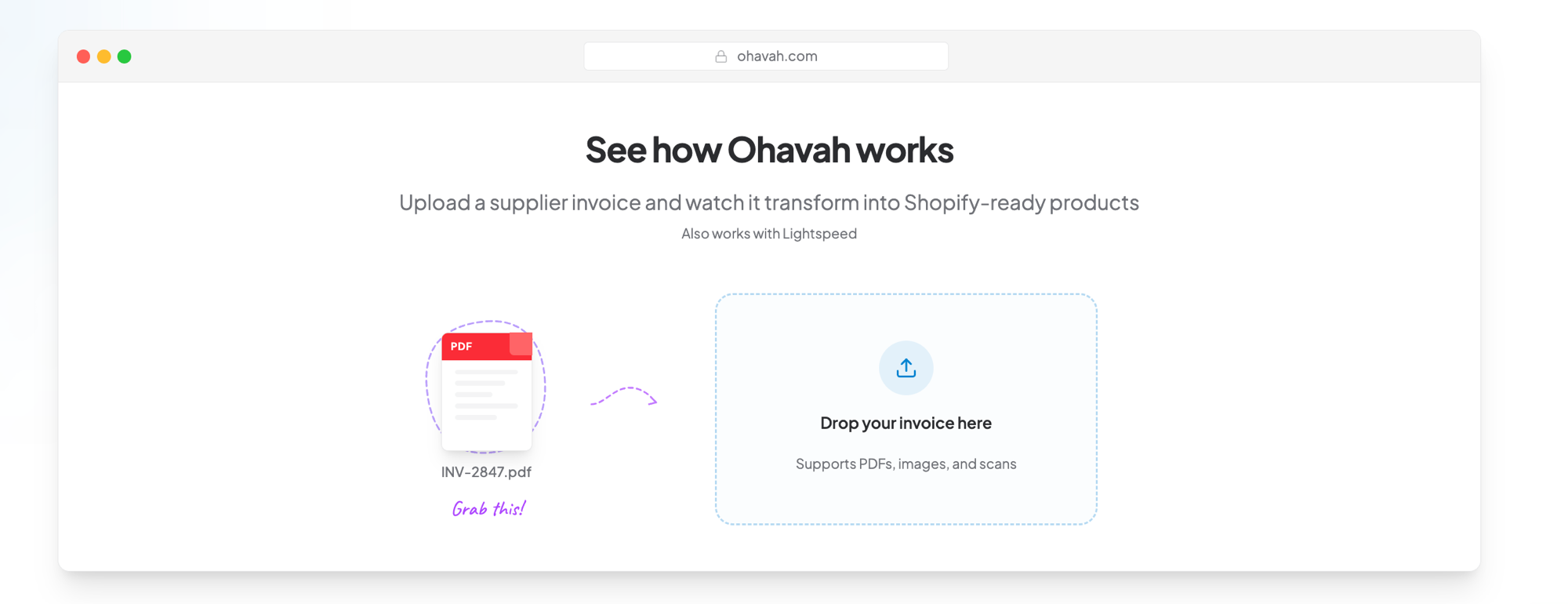
When a shipment lands, upload the supplier invoice and Ohavah turns it into ready-to-import Shopify products in minutes, titles, variants, prices, and all. The hours you'd have spent typing line items into a spreadsheet become hours you can spend adding the one thing software can't know: how the piece actually fits. Your online store is your second location, and it deserves the same fit expertise your floor has.
Boutique owners tell it in their own words over on our customer stories. Here's Lacy from Willowmere Boutique:
Start with your ten best sellers
You don't have to fix every listing before the holidays. Take your ten strongest pieces, the ones you know are going to move, and rewrite those descriptions with the fitting-room answers first. Stretch, sheerness, what to wear under it, where it hits, what it layers with. Then work down the list as the quiet hours allow.
The knowledge that makes your floor convert has been walking out the door in your associate's head every night. Write it down, put it on the page, and the website starts closing the sales it's been losing all along, right when the year's biggest wave of shoppers shows up. And while you're at it, make sure those listings speak the customer's language on the small stuff too, like giving vendor color names shoppers actually understand.
Try Ohavah free for 7 days and turn your supplier invoices into ready-to-list products in minutes, so the time you save goes into the fit details only your team knows.