Why Product Knowledge Matters More Than Pushy Selling
TL;DR
Customers can smell a pitch, and the harder you push, the harder they pull away. The boutiques that sell the most aren't pushing at all; their owners and associates simply know the brands they carry, the stories behind them, and exactly why they fell in love with each piece. That knowledge does the selling, because a shopper trusts an expert who's sharing something she loves far more than a salesperson trying to close her. Building a knowledgeable team comes down to a few habits:
- Learn the brand stories, not just the price tags
- Know why each piece earned its spot on your floor
- Let enthusiasm replace pressure
- Carry that same knowledge into how you describe products online
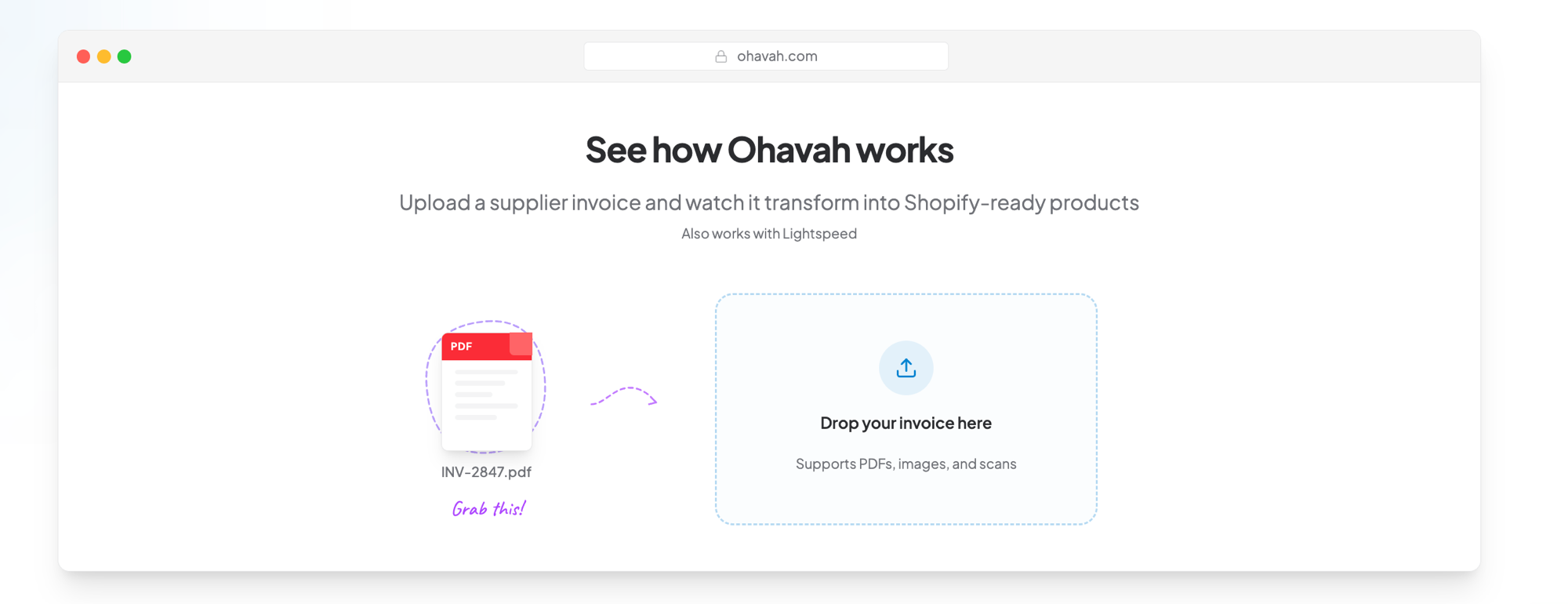
Ohavah takes the tedious data entry out of getting products online, turning supplier invoices into ready-to-publish Shopify listings in minutes, so you spend your time on the brand story that actually sells instead of typing in SKUs.
Turn supplier invoices into products instantly
Skip the manual data entry. Upload a PDF, get ready-to-import products.
Think about the last time a salesperson made you uncomfortable. Odds are they weren't rude, they were just pushing, hovering a little too close, talking a little too fast, steering you toward the thing they clearly needed to move that day. You felt the pressure, and your instinct was to leave. Now think about the last time someone in a shop genuinely knew their stuff, told you the story behind a piece, explained why it was made the way it was, and let you decide. You probably bought something, and you probably went back.
That contrast is the whole argument for product knowledge over pushy selling. One repels customers, the other earns them. And the difference isn't charisma or a hard-sell script; it's whether the person helping you actually knows and loves what they're selling.
Why pushing backfires
There's a real psychological reason the hard sell works against you, and it has a name: reactance. When people feel their freedom to choose is being threatened, they push back to reassert control, even against something they might otherwise have wanted. A customer who feels cornered into buying a jacket doesn't just decline the jacket; she gets defensive about the whole visit and leaves sooner. The pressure that's supposed to close the sale is the exact thing that kills it.
Product knowledge sidesteps reactance entirely, because sharing information doesn't feel like a threat to anyone's freedom. When an associate says "this is from a small mill in Portugal that's been weaving this linen for three generations, that's why it softens instead of pilling," she isn't pressuring the customer toward a decision. She's handing over something interesting and leaving the choice where it belongs. The customer stays relaxed, stays curious, and stays in the store, and a relaxed, curious customer buys far more than a cornered one.
Customers trust an expert, not a closer
People take cues from credible sources, an effect researchers call the messenger effect, and the more genuinely expert the messenger seems, the more weight her words carry. In a boutique, expertise is the most valuable thing your team can project, and it can't be faked with a script. A customer can tell within seconds whether an associate actually knows the merchandise or is reciting tag copy.
When your team knows the product cold, every interaction gets easier:
- They answer the real questions. "Will this shrink?" "Does it run small?" "What's it like after a few washes?" A knowledgeable associate answers instantly and honestly, and that honesty, including telling a customer when something isn't right for her, is what makes her trust the recommendations that follow.
- They recommend with conviction. "I think this is great" lands very differently when it's followed by a real reason. Conviction backed by knowledge is persuasive in a way that enthusiasm alone never is.
- They never sound like a pitch. Sharing what you know reads as helpful. Pushing what you need to sell reads as desperate. Customers can tell the two apart every time.
Start with the brand stories, not the price tags
The foundation of all of this is knowing the brands you carry as more than a name and a wholesale cost. Every brand on your floor has a story, a founder, a reason it exists, a point of view on how clothes should be made. That story is the most powerful selling tool you have, and most boutiques leave it completely unused.
Owners need to lead here, because you're the one who chose these brands in the first place. You picked them at market for a reason, maybe the way they cut a trouser, the ethics of how they source, the designer's eye, the fact that nobody else in town carries them. Write those reasons down and teach them to your team. When a new associate can tell a customer "the founder started this line because she couldn't find dresses with pockets that still looked elegant," she's not selling a dress, she's sharing something the customer will actually remember and repeat. This is also one of the quiet payoffs of building strong relationships with the brands you carry: the closer you are to a vendor, the more of the story you have to tell.
Know why each piece earned its spot
Beyond the brand, your team should understand the individual pieces, because that's where styling and selling actually happen on the floor. Why is this blazer worth its price? What makes the fabric special? What does it pair with? Which body types does this silhouette flatter? An associate armed with those answers can guide a customer with genuine authority instead of vague flattery.
This knowledge is what makes the difference between an associate who can only ring up what a customer brings to the counter and one who can build a complete outfit around a single piece. You can't confidently suggest the top that goes with the skirt if you don't know how either of them fits or feels. Product knowledge and outfit selling reinforce each other, and a team that has both is a genuinely different sales force from one that has neither.
The same knowledge sells online
Everything above applies on the floor, where you can read a customer and tell the story in person. Online, you don't get that chance, so the story has to live in the product description instead. A listing that just says "Linen Blazer, $168" gives a shopper nothing to fall in love with, while one that carries even a sentence of the brand story and a reason the piece is special does the same job your best associate does in the store. The knowledge that makes your team persuasive in person is exactly what should be going into your website.
The reason most boutiques' online listings are thin isn't that owners don't know their products; it's that getting products online at all is such a slog that nobody has the energy left to write anything good. Photographing, naming, pricing, and typing every SKU from a new shipment into Shopify eats hours, so listings end up as bare-minimum stubs. Ohavah turns the supplier invoice for a shipment into ready-to-publish Shopify listings in minutes, which clears away the data entry and leaves you free to spend your time on the part that actually sells, the brand story and the reason you fell for each piece in the first place. The same expertise that earns trust on your floor is what should be earning it on your product pages.
The playbook
- Kill the hard sell. Pressure triggers reactance and pushes customers out the door. Lead with knowledge, not urgency.
- Be the expert. Customers trust a credible, knowledgeable source far more than a closer, so make expertise the thing your team projects.
- Teach the brand stories. Owners should write down why they chose each brand and teach it, because the story is your most underused selling tool.
- Know every piece. Fit, fabric, pairings, and price justification are what let an associate style a full outfit with confidence.
- Put the story online. Use Ohavah to clear the data entry so you can write listings that carry the same knowledge that sells in person.
The best boutiques never feel like they're selling you anything, even as you walk out with three bags. Their people know what they're talking about, they love what they carry, and they're happy to share it, and that's a far better sales engine than any amount of pressure.
Try Ohavah free for 7 days and spend your time on the brand stories that sell, not the data entry that doesn't.