How Strong Brand Partnerships Lead to Better Business
TL;DR
Your relationship with your brands and reps is one of the most underrated assets in your business. The stores that invest in those relationships get early access to bestsellers, better terms, and priority when inventory is tight. It's a two-way street. Ohavah helps you hold up your end by getting new products listed and selling faster, which means better sell-through numbers to show your vendors.
Turn supplier invoices into products instantly
Skip the manual data entry. Upload a PDF, get ready-to-import products.
Quick story. Two boutique owners place the same opening order with the same brand. Same dollar amount, same product mix. One of them moves 80% of the inventory in six weeks, reorders twice, and sends the rep photos of the product styled in her store. The other sells through about half, never reorders, and the rep doesn't hear from her until the next market.
Next season, the brand releases a limited capsule collection. Ten stores get early access. Which owner do you think gets the call?
This isn't about playing favorites. It's about how wholesale actually works. Brands have limited production capacity, limited inventory, and reps who cover dozens (sometimes hundreds) of accounts. The retailers who make their job easier and their brand look good get more attention. That attention turns into real business advantages.
What reps actually want from you
Reps aren't just order-takers. The good ones are building a book of business, and your success is their success. Every unit you sell is a unit they get credit for. Every reorder goes on their numbers. When you perform well with a brand, the rep looks good to their company, which means they have more leverage to do things for you.
Here's what matters to them:
Sell-through. Above everything else. A store that moves product at full price and reorders consistently is the dream account. Reps track this, and brands track this. Your sell-through rate with a brand determines how much of their attention and inventory you get access to.
Communication. When product arrives, let your rep know. When something sells well, tell them. When something isn't working, tell them that too, early, before it becomes a markdown problem. Reps can often suggest swaps, adjust future shipments, or flag a trend they're seeing across their territory that might help you merchandise differently.
Presentation. Brands care how their product shows up in your store. Photos of their pieces styled well on your floor, tagged on social media, featured in your email marketing. This costs you almost nothing, but it gives the brand content they can use and gives your rep proof that their accounts are doing the work.
Payment terms. Paying on time is table stakes. Paying early, or at least never being the store the rep has to chase, puts you in a different category. When inventory is tight and the rep has to choose who gets the last allocation, the store with clean payment history wins.
What you should expect from your brands
This goes both ways. A strong brand partner gives you more than just product.
Early access to new collections. You should be hearing about key launches before they hit the general order window. If you're consistently a top performer with a brand and you're finding out about new drops the same time as everyone else, have that conversation with your rep.
Marketing support. Many brands offer co-op marketing dollars, approved imagery, social media assets, or even collaborative campaigns for their retail partners. Ask. A lot of boutique owners don't realize these programs exist because nobody told them.
Flexible terms when you need them. A strong relationship means you can have honest conversations when cash flow is tight or when you need to shift a ship date. Reps and brands would rather work with you than lose the account. But that flexibility only exists if you've built goodwill by being a reliable partner the rest of the time.
Territory awareness. Good brands manage their retail distribution. If you're carrying a brand and they start placing it in three other stores on your street, that's a problem. A strong brand partner protects your territory, or at least communicates openly about their distribution strategy.
Product feedback loops. The best vendor relationships include real conversations about what's working and what isn't. If a particular fit runs small, or a fabric pills after two washes, your feedback helps the brand improve. In return, they should be listening and adjusting. If your feedback goes into a void, the relationship is one-directional.
There's a selling payoff to all this closeness, too. The more you know about a brand's story and the thinking behind each piece, the more your team can pass on to customers, and product knowledge sells far better than any hard pitch. A tight vendor relationship is where the best of that knowledge comes from.
The sell-through problem nobody talks about
Here's where a lot of boutique owners lose ground with their brands without realizing it.
You place a great order at market. The shipment arrives. The product goes on the floor. But it takes you three weeks to get those same products listed on your website. By the time your online store has them, the first rush of in-store excitement has passed, and you've missed the window where social media buzz and in-store traffic overlap.
Your sell-through for that brand looks mediocre. Not because the product was wrong, but because half your sales channel wasn't stocked.
Your online store is a second location. When it's not stocked, you're running that brand in one store instead of two. Your sell-through numbers reflect that, and so does your relationship with the brand over time.
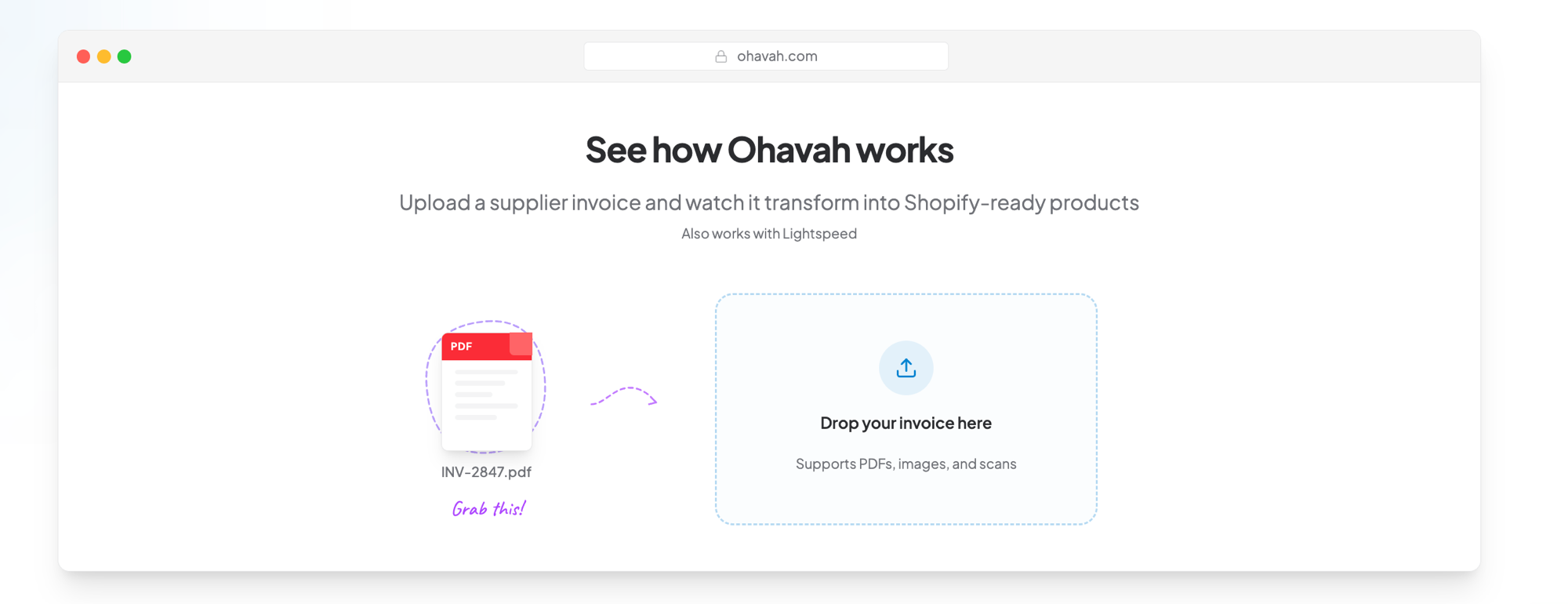
See how Ohavah gets your new products online fast. Upload the supplier invoice, configure your pricing, and download a Shopify-ready import file with all variants, tags, and product data filled in. Better sell-through starts with getting product in front of customers sooner, on every channel.
Small moves that build big relationships
You don't need a grand strategy. Consistency matters more than gestures.
Send sell-through updates. Even informal ones. A text to your rep saying "that floral midi sold out in four days, I need more" does two things: it gets you a reorder, and it gives the rep a data point they can use with their company. They remember the stores that give them wins.
Tag the brand on social. When you style their product in your store, post it and tag them. When a customer buys a piece and loves it, share that. Brands are hungry for retail content. It takes you two minutes and it keeps you visible to their marketing team.
Attend brand events. Trunk shows, pop-ups, launch dinners. Even virtual events. Showing up signals that you're invested in the brand beyond just buying inventory. These are also where you hear about upcoming collections, meet the design team, and build relationships that go beyond transactional ordering.
Pay your invoices on time. It sounds basic. It is. But a surprising number of boutiques run late on payment, and it quietly erodes the relationship. Your rep knows who pays on time. So does the accounts receivable team at the brand. When allocation decisions come up, payment history is part of the conversation.
Give honest feedback. If a collection underperformed, say so constructively. "The tops did great but the pants ran too large for my customers, I had to mark them down early." That's useful. The brand can act on it. Silence just means you order less next season and the rep wonders why.
When a partnership isn't working
Not every brand relationship is worth maintaining. If you've been carrying a brand for multiple seasons and the sell-through is consistently low despite good placement and marketing effort, it might be time to move on.
Signs the fit is off:
- Your customers browse the brand but don't convert, even at the right price points
- The brand keeps changing direction on fit, sizing, or style in ways that don't align with your customer
- Your rep is unresponsive or the brand makes distribution decisions that undermine your territory
- Payment terms or minimum orders have become unreasonable relative to performance
Dropping a brand isn't a failure. It's buying discipline. The shelf space and open-to-buy dollars that brand occupied can go toward a vendor that actually performs. Review your sell-through data before market and let the numbers guide the decision, not loyalty to a relationship that isn't producing results.
The compound effect
Boutique owners who invest in their vendor relationships see the payoff compound over time. Better allocation means more bestsellers in stock. More bestsellers means better sell-through. Better sell-through means the brand invests more in your account. The cycle builds.
And it works the other direction too. Stores that treat vendors as interchangeable, that never communicate, that pay late and expect priority, gradually lose access. The brands don't cut you off. They just stop calling when the good stuff is available. Reps have a sharp eye for the difference, and it's worth understanding what vendors notice about the stores that thrive so you end up on the right side of it.
Your vendor relationships are an asset. Treat them like one. Show up, communicate, move the product, and make it easy for your brands to invest in you. The retailers who do this consistently are the ones who always seem to have the best inventory.
Try Ohavah free for 7 days and see how faster product listings improve your sell-through with every brand you carry.