What Vendors Notice About Successful Stores
TL;DR
A good rep works with dozens of boutiques at once, so they develop a sharp eye for which stores are going to thrive and which are going to struggle. The ones they bet on share a pattern. They trust their reps and lean on bestseller guidance, they run their online store as a real second location, they go live and turn arrivals into events, they host community events, they leave a lasting impression on their biggest spenders, and they collect contacts and keep customers updated to build momentum. Most of it comes back to one thing vendors can measure: how fast and how fully a store moves product. Ohavah helps you move it faster by turning your supplier invoices into ready-to-import Shopify listings in minutes, so the product you bought is online and selling while the demand is still hot.
Turn supplier invoices into products instantly
Skip the manual data entry. Upload a PDF, get ready-to-import products.
A good rep sees more boutiques in a season than most owners will see in a lifetime. They walk dozens of stores, watch hundreds of orders play out, and track which pieces sold through and which ones landed on the clearance rack. After enough cycles, they can walk into a shop, talk to the owner for twenty minutes, and tell you with surprising accuracy whether that store is going to grow or quietly fade.
They're not reading tea leaves. They're noticing a pattern, the same handful of habits that show up again and again in the stores that win. The good news is that none of it is a secret, and none of it requires more money than the store down the street has. It's a way of operating, and once you see what the vendors see, you can borrow every piece of it.
They trust their reps and take the bestseller hint
The single clearest tell, the one a rep picks up on in the first conversation, is whether an owner actually listens. A rep covering a territory knows which pieces are flying out of every other store they call on. When they tell you "the ribbed midi is selling out everywhere, go deeper on it," that isn't a sales pitch, it's a read on real demand across dozens of stores you can't see.
The owners who thrive treat that intel as the gift it is. They find a rep whose taste and honesty they trust, and then they lean on that judgment instead of second-guessing every suggestion. The owners who struggle do the opposite, ordering on personal taste alone and treating the rep as an order-taker to be managed rather than a partner to learn from.
This connects directly to a buying mistake we've written about before, which is chasing the shiny new brand while underfunding your proven sellers. Reorders are boring, and they pay the rent. A rep who trusts that you'll actually act on a bestseller tip is a rep who starts calling you first when the next one comes in, and that early access compounds season after season. The whole dynamic is a two-way street, and the more you invest in the relationship the more your brands look out for you.
They run their online store like a real second location
When a rep checks how an account is doing, they look at sell-through, and sell-through is a number you can quietly cripple by leaving half your sales channel empty. The stores vendors respect treat their website as a genuine second location that's open 24/7 with no lease and no staffing, not an afterthought they update when they find a spare evening.
Here's why the rep cares. You place a strong order at market, the shipment lands, and the product goes on the floor. If it takes three weeks to get those same styles onto your website, you've run that brand in one store instead of two during the exact window when in-store buzz and online demand overlap. Your sell-through for that brand looks mediocre, not because the product was wrong, but because half your shelf space was sitting dark. The brand sees a soft number and quietly invests less in your account next season.
The owners who get this listed fast. Their market buys are online within days of arriving, the brand sees strong sell-through across both channels, and the relationship strengthens on the strength of numbers that are simply more complete.
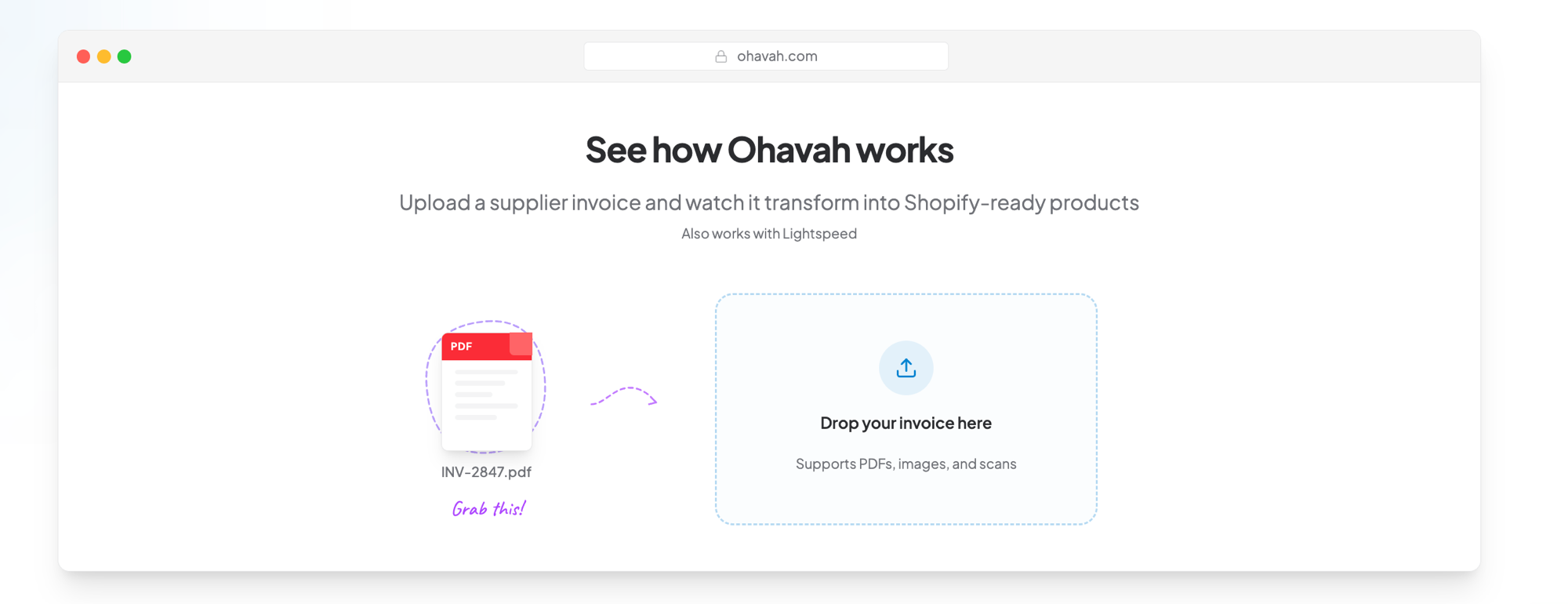
See how Ohavah gets your new arrivals online fast. Upload the supplier invoice, set your markup rules, and download a Shopify-ready import file with every variant, tag, and product detail already filled in. Better sell-through starts with getting product in front of customers on every channel sooner.
They go live and make arrivals an event
Vendors notice which of their accounts are loud about new product. When a brand sees a store going live with their pieces the night a shipment lands, tagging them, building a moment around the drop, that store becomes the one the brand wants to feed first, because the owner is doing the brand's marketing for free and selling through in the process.
Going live works because it does everything a flat product photo can't. Customers see how a piece actually moves on a real body, you answer "does it run small?" the second someone asks, and the broadcast carries the urgency of a room full of people grabbing limited pieces at once. It rides the same shift toward raw, authentic content that's beating polished studio shots, and a new shipment is the easiest authentic content you'll ever make. If you want to see what that looks like in practice, check out how Ohavah boutiques promote themselves on social, going live with their drops and posting the kind of casual content their customers actually stop to watch.
The catch is that going live only converts if customers can buy the instant they fall in love. If a viewer watches you hold up a jacket and then finds it isn't on your site yet, you've spent all that anticipation and caught none of it. The stores that win build hype around the drop and make sure every piece is shoppable the moment the hype peaks, so the live broadcast and the checkout finally line up.
They turn the store into a place people gather
The boutiques reps brag about are usually the ones doing something in their community. Not a store-wide sale, but an actual event, a Sip & Shop, a themed watch party, a private invite-only night for their best customers. These owners understand that people buy more with friends than alone, and that an evening built around the experience sells without ever touching a margin.
Events also feed the vendor relationship in a way owners underestimate. A well-run trunk show or brand night gives a vendor proof that you can sell their product and gather a crowd around it, which is exactly the kind of account a brand wants to give exclusive inventory and early collections to. The event drives sales tonight, and it strengthens a partnership that pays off all year.
They leave a lasting impression on their best guests
Ask a rep about their strongest accounts and they'll often describe an owner who treats her top customers like friends. There's one boutique we love telling people about whose owner sends real roses, delivered to the home with a handwritten note, every time a customer crosses $500. The customer wasn't expecting anything, and two days later flowers show up from the store she shopped at. She stops being a customer and becomes a fan who tells everyone.
This taps something psychologists call the reciprocity principle, the deep human pull to give back to someone who gave to you first. A genuine, unexpected gesture lands far harder than any points card, because loyalty is built on being remembered, not rewarded. Set a $60 bouquet against a customer who spends $3,000 a year and the math stops looking like an expense. The stores that thrive pour their attention into the relationships that already drive most of their revenue, and vendors can feel that warmth the moment they walk in.
They collect contacts and build momentum
The last habit ties the rest together. Successful stores capture guest contact information relentlessly, a sign-up at the door, a giveaway entry, a quick "want first access to the next drop?" at checkout. A great night turns into an audience they can reach for months instead of a one-time crowd that disappears.
Then they actually use that list to keep customers updated on new drops and bestselling pieces, which keeps the store top of mind through the natural quiet stretches. Marketers lean on the mere-exposure effect here, the simple fact that people warm to what they see regularly, so a steady drumbeat of "this just landed and it's already moving" keeps demand alive between visits. Every "the floral midi everyone wanted is back in stock" text does double duty, since it pulls a customer back in and signals to your rep that you're moving their product. The momentum builds on itself, and it's the same flywheel vendors recognize in every account they'd happily give their best inventory to.
The thread running through all of it
Step back and the pattern reps notice comes down to one thing they can measure: the stores that win move product, fast and on every channel. Trusting your rep gets the right product in. Going live, events, lasting impressions, and a well-tended contact list create the demand. The online store captures that demand wherever the customer happens to be.
The piece that quietly sinks a lot of otherwise great stores sits right in the middle of that chain. You build the hype, the customers show up ready to buy, and then the product isn't listed yet because getting a fresh shipment into Shopify is hours of typing in names, prices, and SKUs one by one. The momentum runs into a checkout that isn't ready, and the sell-through number your rep sees comes in soft.
Ohavah turns the supplier invoice for a shipment into ready-to-publish Shopify listings in minutes, so the product you bought is online the same day you show it off. The hype, the event, the live broadcast, and the checkout finally line up, and your vendors see the strong, complete sell-through that makes you the account they call first.
Try Ohavah free for 7 days and get every new shipment online fast, so you run like the kind of store vendors bet on.