How to Create Hype Around New Arrivals
TL;DR
A new shipment that just appears on the floor with no warning sells like any other Tuesday, while the same shipment teased for a week sells like an event. The difference isn't the product, it's the anticipation you build before anyone can buy. The boutiques that consistently sell out their drops follow a pattern:
- Tease the arrival before it lands, so customers are waiting instead of discovering
- Set a real drop time and treat it like an event
- Go live to show the pieces on, answer questions, and sell in real time
- Make sure every piece is actually live and shoppable the second the hype peaks
Ohavah is what makes that last point possible, turning the supplier invoice for a new shipment into ready-to-publish Shopify listings in minutes, so your arrivals are online and shoppable the moment you announce them instead of three days later when the excitement has already faded.
Turn supplier invoices into products instantly
Skip the manual data entry. Upload a PDF, get ready-to-import products.
Picture two boutiques getting the exact same shipment on the same morning. The first one unpacks the boxes, steams everything, puts it on the floor, and posts a photo that afternoon with the caption "new arrivals!" A handful of regulars notice over the next week and a few pieces sell. The second boutique spent the previous five days teasing the shipment, posted a countdown to a Friday-night drop, went live the moment it landed, and sold through half of it before closing. Same clothes, same cost, wildly different result, and the only thing that changed was the anticipation built before anyone could buy.
With new arrivals, that buildup is the whole game, because the product matters but the hype around it is what turns a restock into a moment your customers plan their week around.
Why anticipation sells more than the product
There's a real reason the buildup works, and it isn't just hype for hype's sake. Researchers studying reward have found that the anticipation of something good fires off as much excitement as actually getting it, sometimes more. The waiting, the wondering, the checking your phone for the drop, all of that is part of the reward, not a delay before it. When you tease an arrival, you're not stalling the sale, you're stretching the most enjoyable part of it across several days and letting it build.
Anticipation also stacks two other forces in your favor. The first is scarcity, because a boutique buys small runs and customers know it, so "this drops Friday and there are only a few of each" is true and it lands. The second is FOMO, the very real fear of missing out, which kicks in the moment a customer sees other people excited about something she hasn't seen yet. A quiet shipment on the floor triggers none of this, while a teased, time-boxed drop triggers all three at once.
Tease before it lands
The buildup starts before the product is even on your floor, often before it ships. The goal is to get customers waiting for the arrival instead of stumbling onto it, and that means showing just enough to spark curiosity without giving the whole thing away. Post a corner of a print, a stack of folded sweaters still in the poly bags, a peek at a color you know your regulars love. Tell them when it's coming and tell them it's small, so they understand showing up early matters.
The most underused tease is the unboxing itself. When a shipment arrives, the boxes coming in, the first piece pulled out, your genuine reaction to something you forgot you ordered, all of that is content your customers actually want to watch, and it's the opposite of the overproduced studio shot that nobody trusts anymore. An unboxing rides the same shift toward raw, authentic content beating polished content that's reshaping how boutiques sell online, and a new shipment is the easiest authentic content you'll ever make.
Set a drop time and make it an event
Vague beats nothing, but a specific drop time beats vague by a mile. "New arrivals this week" gives a customer no reason to act, while "everything goes live Friday at 6pm, and the floral dress everyone's been asking about is in" gives her a reason to set a reminder. A real drop time creates a shared moment, and a shared moment is what gets your customers talking to each other instead of just scrolling past you.
Treat the drop like you'd treat an in-store event, because it works for the same reasons. If you already run events that turn the experience itself into the sell, a launch drop is the online version of exactly that. Build a little ceremony around it, count down to it, and reward the people who show up on time with first pick. The countdown does double duty, since every reminder you post is another touch that keeps the arrival top of mind right up until the moment they can finally buy.
Go live when it drops
Nothing sells new arrivals like going live, because a live video does everything a teaser can't. Customers get to see how a piece actually moves and fits on a real body instead of guessing from a flat photo, you can answer "does it run small?" the instant someone asks, and the whole thing carries the urgency of a room full of people grabbing the same limited pieces in real time. A live is your floor associate, your fitting room, and your sense of scarcity all rolled into one broadcast. You can see how real Ohavah boutiques promote themselves on social, from going live to TikTok, over on our customer stories.
The key is that going live only works if customers can buy the moment they fall in love. If a viewer watches you hold up a jacket, decides she wants it, and then finds it isn't on your site yet or won't be listed until tomorrow, you've spent all that anticipation and caught none of it. The hype peaks during the live, and that's the exact window the product has to be shoppable.
The hype is wasted if the product isn't live
Here's where most boutiques quietly lose the sale. They do the teasing, they build the buildup, they go live, and then the actual listings lag days behind because getting a fresh shipment into Shopify is such a slog. Every new piece has to be photographed, named, priced, and typed in SKU by SKU, and when a shipment is fifty or a hundred new items, that work simply doesn't get done before the hype fades. The anticipation you worked all week to create runs into a checkout that isn't ready.
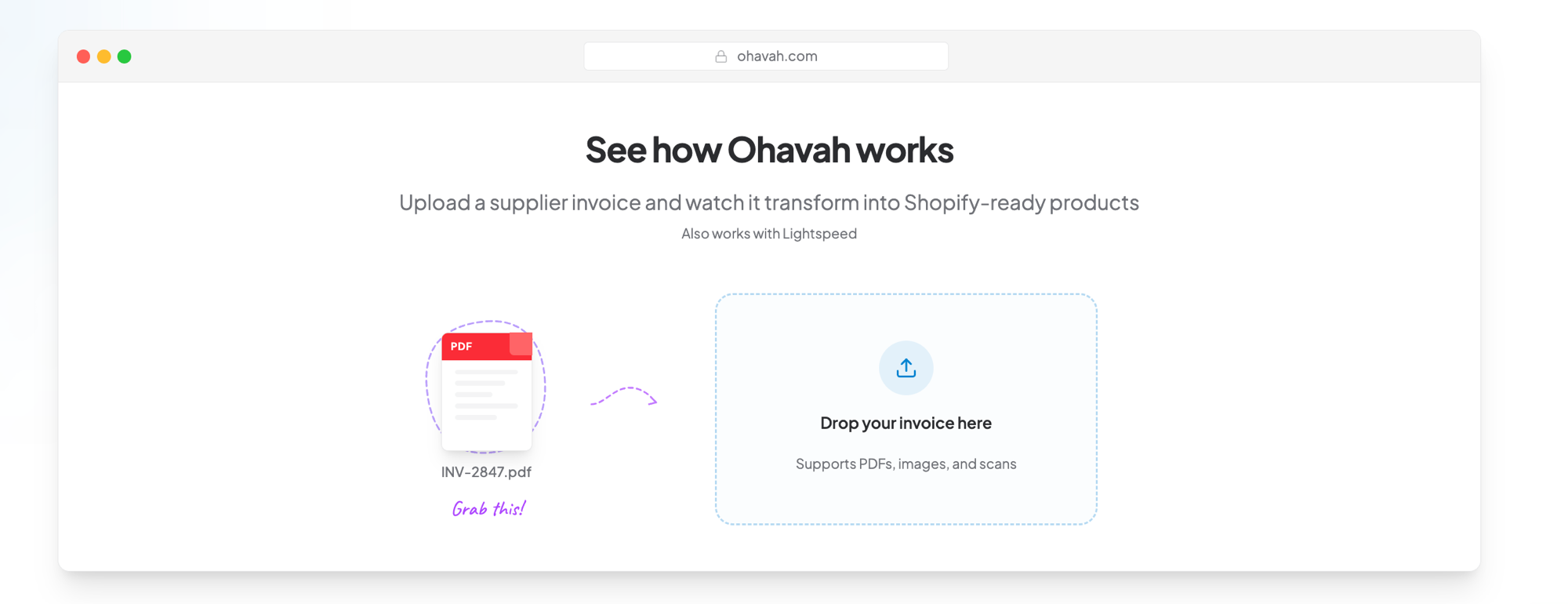
Ohavah turns the supplier invoice for a new shipment into ready-to-publish Shopify listings in minutes, which means the entire arrival can be online and shoppable before you ever post the first teaser. You build the hype knowing the product is already loaded and waiting behind a scheduled drop, so the second you go live and announce it, customers can buy. The buildup and the checkout finally line up, and that's the difference between a drop that sells out and one that trickles.
The playbook
- Tease before it lands. Show a corner of a print, the boxes coming in, your real unboxing reaction. Get customers waiting, not discovering.
- Set a real drop time. "Friday at 6pm" beats "this week" every time, because a specific moment gives people a reason to show up and tell their friends.
- Lean on anticipation, scarcity, and FOMO. They're all real, they all work, and a teased small-batch drop triggers all three at once.
- Go live. Show the pieces on, answer questions in real time, and let the scarcity do the rest.
- Have everything listed first. Use Ohavah to get the whole shipment into Shopify before you tease it, so the product is shoppable the instant the hype peaks.
A new shipment is the most exciting thing that happens in your store all month, so stop letting it land like a normal Tuesday. Build the anticipation, give people a moment to show up for, and make sure they can buy the second they want to.
Try Ohavah free for 7 days and get every new arrival online in minutes, so your next drop is ready to sell the moment you hit go.