What Makes Customers Actually Try Things On
TL;DR
Customers try things on far more often when you make it easy and offer it out loud. Ask "want me to start a room for you?", keep the fitting rooms clean, well-lit, and stocked with hooks and a stool, and bring the next size or a matching piece while she's already in there. A shopper who tries something on is much closer to buying it than one who only holds it. That same instinct works online through honest fit notes and try-on videos, and Ohavah gets new arrivals listed from your supplier invoice in minutes so the piece she wants to try is ready to buy the day it lands.
Turn supplier invoices into products instantly
Skip the manual data entry. Upload a PDF, get ready-to-import products.
There's a moment in every sale that matters more than almost any other, and it's easy to miss because nobody announces it. It's the point where a customer stops holding a garment at arm's length and decides to actually try it on. Once she's in the fitting room with it, wearing it, seeing herself in it, she's a different shopper than the one browsing the rack. The distance between "that's cute" and "I'll take it" almost always runs through the fitting room.
Most boutiques leave that moment to chance. The customer has to notice the fitting rooms, decide on her own to use them, and carry an armful of hangers back there without help. Plenty of people won't bother, and they walk out with the piece unbought and the decision unmade. A few small habits change how often that moment happens.
Why the fitting room does the selling
When someone tries a piece on, something shifts in how she values it. Psychologists call it the endowment effect. Once we handle something and imagine it as ours, we're reluctant to give it up. A dress on a hanger is a maybe. The same dress on her body, in the mirror, is already half hers, and setting it back down starts to feel like a small loss.
The try-on matters so much more than the browse because of that shift. She's no longer picturing whether it might work; she's looking at whether it does. The fit question gets answered, the "where would I wear this" question usually answers itself, and the piece stops being one of many options and becomes the one she's wearing right now. Your whole job before that moment is just getting her into the room with something worth trying.
Make the offer out loud
The single biggest lever is also the simplest, and it's the one most stores skip, which is offering the room in the first place. A lot of shoppers won't start a fitting room on their own. They don't want to seem committed, they're not sure it's allowed while they keep browsing, or they just don't want to carry everything back there. So they hold the piece, browse a while longer, and eventually put it down.
A warm, specific offer removes all of that. "Want me to start a room for you? You can keep looking and it'll be waiting." Now the friction is gone, the hangers are off her arm, and there's a room with her name on it pulling her toward the try-on. Train your team to offer the moment they see someone carrying two or more pieces, and to keep it light rather than pushy. This is the kind of low-key, helpful selling that beats a hard pitch every time, and it starts more fittings than any sign ever will.
Make the room somewhere she wants to be
Once she's back there, the room itself is either helping you or killing the sale. A cramped, dim fitting room with harsh overhead light and one wobbly hook makes even a great dress look wrong, and a shopper who doesn't like what she sees blames the garment, not the lighting. You spent real money on the inventory. Don't let a bad bulb undo it.
You don't need a renovation, just a room that respects the person in it:
- Flattering light. Soft, warm light at face level does far more for how a piece reads than a single bright fixture overhead.
- A clean mirror, and ideally two. A three-quarter view sells fitted pieces and dresses that a straight-on mirror can't.
- Enough hooks. Separate hooks for "trying," "yes," and "no" encourage her to build a bigger pile.
- A stool or bench and a place for her bag. Small comforts keep her back there longer, and longer means more pieces tried.
Walk into your own fitting rooms as a customer would, at the end of a busy day, and notice what you notice. Stray pins, a dead bulb, a smudged mirror, last customer's rejects still hanging up. Those little things tell a shopper how much care to expect, and they're free to fix.
Bring the second size before she asks
The most valuable thing your team can do happens after she's already in the room. A shopper in a fitting room with the wrong size is one abandoned try-on away from leaving. If she has to get dressed, come find someone, and wait for a different size, most people just give up and hand it back.
Great associates head that off. Check in once, warmly, not hovering: "How's the fit? Want me to grab the next size up just in case?" Bring the other size before she asks, and while you're at it, bring the piece that finishes the look, the cardigan that goes with the dress or the denim that works with the top. She's already committed to trying things on, so an extra piece in her hands is an easy yes, and it turns a single item into an outfit. This is the fitting-room version of styling a full look instead of selling one piece, and it's where a lot of a boutique's add-on sales and higher order values come from.
Take the risk out of yes
Even wearing a piece she loves, a shopper can still hesitate, and often the reason isn't the fit. It's the worry about being wrong, that she'll get it home and it won't work, and she'll be stuck with it. The stores that convert well are the ones that answer that worry before she has to voice it.
Sometimes that's a friendly, clear return or exchange policy she doesn't have to dig for. Sometimes it's honest guidance in the moment, the kind that builds trust because it isn't trying to close every sale. "That color's gorgeous on you, but this one runs snug in the shoulders, so let me grab the size up" earns more goodwill than calling everything perfect, and it's a big part of turning a first-time shopper into a regular. A customer who trusts that you'll steer her right is a customer who says yes more easily and comes back to do it again.
The fitting room has an online version
Your website doesn't have a fitting room, which is exactly why online shoppers hesitate. They can't feel the fabric, can't check the fit, can't see it move. Whatever the fitting room does in your store, your job online is to answer the same questions before she has to guess.
That's what a good try-on video or an honest fit note does. Showing the piece on a real person, calling out where it runs snug or roomy, saying which size you're wearing and who should size up, all of it stands in for the mirror she can't use from her couch. It's the same reason try-ons and fit details are what boutique customers respond to on Instagram right now. Give an online shopper the information she'd get in your fitting room, and she'll buy with the same confidence.
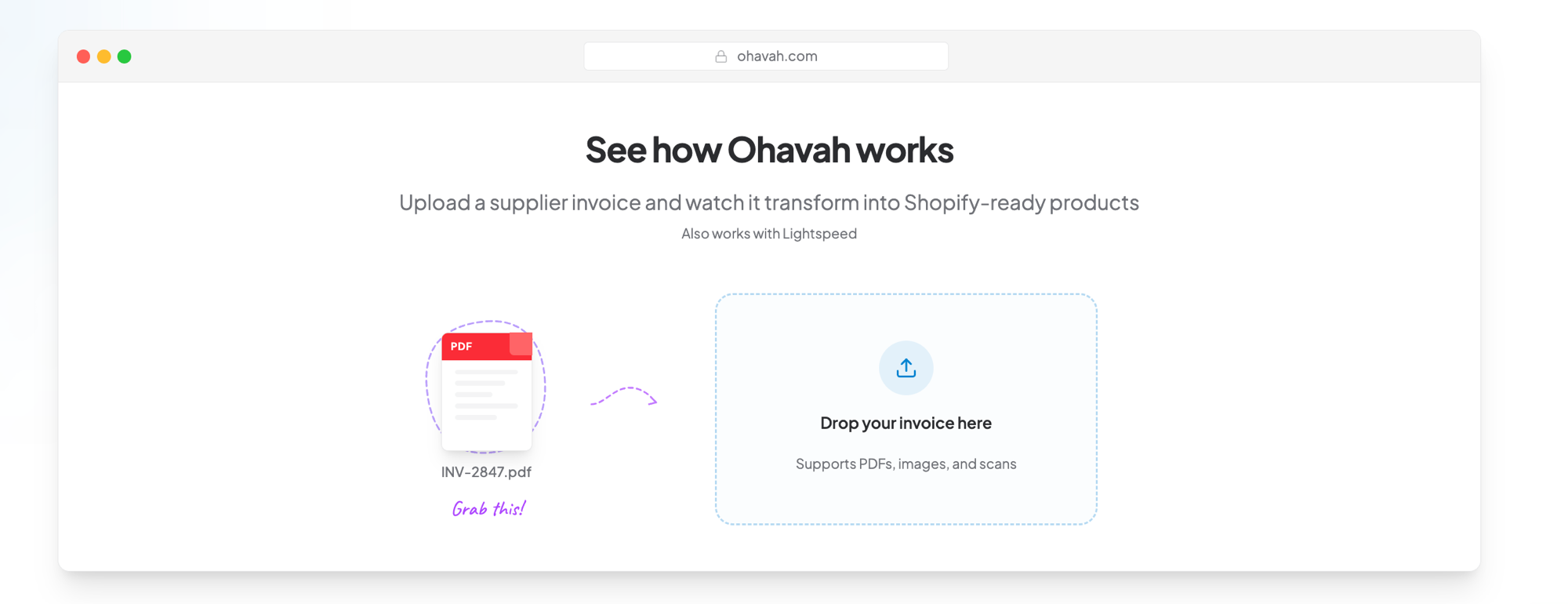
None of that helps, though, if the piece isn't listed yet. When a shopper sees a try-on and the product won't be on your site for another week, the moment passes. Ohavah turns a supplier invoice into ready-to-import Shopify listings, with variants, sizes, and pricing filled in, so a new arrival is online and buyable the day it lands instead of a week later, ready the moment someone watches your fit video.
You can see how real Ohavah boutiques get new product online and in front of customers fast, in their own words, over on our customer stories. Here's Lacy from Willowmere Boutique:
It comes down to a few small habits
Getting more customers to try things on isn't a big project. It's offering the room out loud, keeping that room somewhere a person actually wants to stand, bringing the next size before she has to ask, and taking the fear out of saying yes. Do those consistently and your conversion climbs without a single markdown, because you're helping people reach the decision they were already leaning toward. Do the online version just as well, with honest fit notes on product that's actually listed, and you get the same lift from the shoppers who never walk through your door.
Try Ohavah free for 7 days and get every new arrival listed in minutes, so the pieces your customers want to try on are ready to buy the day they land, in the store and online.