What Brands Wish Boutiques Knew About Production Timelines
TL;DR
The product you buy at market was planned, cut, and committed months before it reached you, and that timeline quietly shapes what you can reorder and which sizes you can actually count on. Once you understand how production works on the brand's side, you stop being caught off guard by sold-out bestsellers and you set smarter expectations around special sizing. The buyers who work with the timeline instead of against it tend to:
- Order decisively on the pieces they believe in, because limited runs do sell out
- Treat "this one will sell out" as information, not a sales line
- Ask about extended and special sizing early, and plan around its longer lead times
- Get new product listed and selling fast, so their sell-through reflects the buy
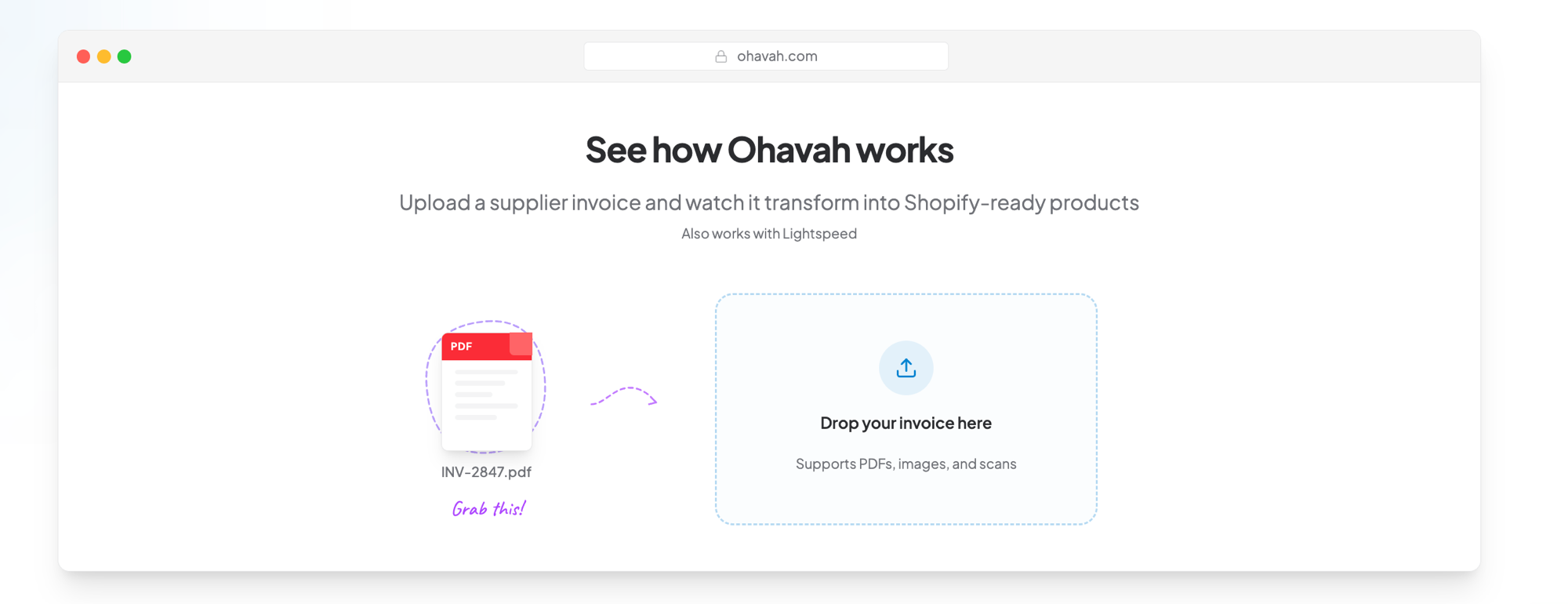
Ohavah helps most with that last point, turning your supplier invoices into Shopify-ready listings in minutes, so product is live and selling the day it lands instead of a week later.
Turn supplier invoices into products instantly
Skip the manual data entry. Upload a PDF, get ready-to-import products.
Ask a brand rep what they wish their accounts understood, and production timelines come up almost every time. Boutique owners see the finished product on a rack at market and it's easy to forget everything that had to happen months earlier to put it there. Fabric had to be sourced, a factory slot had to be booked, quantities had to be locked in, and all of that got decided before anyone knew whether the piece would be a hit or a dud. The brand made its bets a long time ago, and by the time you're placing your order, most of the important decisions are already set in stone.
That gap between when product gets made and when you get to sell it explains a lot of the friction boutique owners feel with their vendors. It's why the bestseller you wanted to reorder is suddenly gone for the season, and it's why the extended sizing your customers keep asking for isn't always as simple to get as it should be. None of this is the brand jerking you around, it's just how clothing gets made, and understanding that makes you a sharper buyer.
Product is planned long before you see it
Most wholesale brands work a full season or two ahead. The spring line you're buying in fall was designed the previous winter, sampled in early summer, and put into production before your market appointment was even on the calendar. When a brand commits to a fabric, they're often buying a fixed quantity of it, and when they book a factory, they're reserving a window that's hard to move. Those commitments happen based on forecasts, not actual demand, because actual demand doesn't exist yet.
This is the same long chain that makes ship dates slip so often. A brand sitting at the end of a fabric mill, an overseas factory, freight, and customs is planning around all of it months in advance, with real money committed at every step. By the time your order lands, the brand has been living with that product for the better part of a year. Knowing that changes how you read what your rep tells you, because they're not guessing when they talk about what's limited and what's coming.
Why bestsellers sell out and stay sold out
Here's the part that frustrates boutique owners the most. A piece flies off your floor, you call your rep to reorder, and the answer is "sorry, that's done for the season." It feels like the brand is leaving money on the table, and it feels like your rep isn't fighting hard enough for you. Usually neither is true.
Brands produce in limited runs because they have to. The fabric was bought in a fixed quantity, the factory slot has closed, and cutting a fresh run of one style means sourcing more material and buying back into a production schedule that's already booked with next season's line. For a lot of pieces, especially anything with a special print or a limited fabric, a reorder simply isn't possible. The run that exists is the run that exists.
So when a rep tells you a piece will sell out and won't come back, take it seriously instead of reading it as a pressure tactic. The owners who do well with limited product are the ones who buy decisively the first time. If you believe in a piece, buy enough of it up front, because the reorder you're planning on may never be available. This is also why scarcity works so well as a selling tool once product is on your floor, and why building hype around genuinely limited arrivals converts the way it does. The scarcity is real, so lean into it honestly with your customers.
The special-sizing tradeoff
Extended and inclusive sizing is one of the most requested things from customers, and for good reason. When a shopper can't find her size, she doesn't just skip that piece, she often stops shopping your store altogether. So the instinct to chase a full size range is the right one for your customers. The catch is what it does to production, and this is where a lot of boutiques get burned without seeing it coming.
Producing a wide size range costs a brand more and takes longer. Each size adds pattern grading, more fabric, and higher minimums, so brands often make extended sizes in smaller quantities, in fewer styles, or on a later delivery than the core run. When you build your floor around sizing the brand can only deliver partially or late, you end up with gaps: a bestseller you can't offer in the sizes half your customers need, or a delivery where the extended sizes show up weeks after the season started. The demand is real, but betting heavily on sizing the production timeline can't reliably support can quietly hurt the offering you're trying to strengthen.
So don't give up on extended sizing, just plan for it. Ask your rep early, before you write the order, which styles come in the full range and when those sizes actually ship. Buy the core sizes deep on the pieces you're confident in, and treat the harder-to-get sizes as something you confirm rather than assume. When you know the sizing situation up front, you can set customer expectations honestly instead of promising a size you may not be able to keep in stock.
What this means for how you buy
Once you internalize the timeline, a few buying habits start to make obvious sense:
- Buy your convictions deep the first time. If a rep flags a piece as limited, don't count on a reorder that may not exist. The run in front of you might be all there is.
- Ask about sizing and delivery before you commit. Which styles come in your full range, and when do those sizes ship? Get the answer at market, not after the gap shows up on your floor.
- Stagger your buys so a late or partial delivery on one order doesn't leave a hole, which pairs directly with knowing when to reorder versus move on.
- Feed your sell-through back to the brand. The faster and cleaner your sell-through data, the more a rep can advocate for you on allocation and future production, which is a core part of how strong brand partnerships pay off.
That last point is where a lot of buyers quietly lose ground. Your sell-through is the number that tells a brand how to treat your account, and it only looks as good as your product's time on the floor allows. A shipment that sits in boxes for a week while you photograph, name, and price every piece is a week of selling you'll never get back, and it's part of what vendors notice about the stores that thrive and what makes a boutique a great retail partner in the first place.
You can see how real Ohavah boutiques get new product online the day it lands, on their own accounts and in their own words, over on our customer stories. Here's Lacy from Willowmere Boutique:
Where the time goes
You can't change a factory's schedule or make a sold-out fabric reappear, but you can control what happens the moment product hits your door. Ohavah turns the supplier invoice for a shipment into ready-to-import Shopify listings in minutes, with variants, tags, and pricing filled in, so a delivery goes from boxes to live and shoppable the same day. When your online store is stocked as fast as your floor, your sell-through reflects the buy you actually made, which is exactly the number your brands are watching.
The brands aren't hiding the ball. Production works the way it works, and the boutique owners who buy with that timeline in mind get fewer surprises, better allocation, and a floor that stays a step ahead of everyone still waiting on a reorder that isn't coming.
Try Ohavah free for 7 days and turn every shipment into Shopify-ready listings in minutes, so your sell-through tells the brand the whole story.