Should You Use Muse for Your Boutique? Yes, Just Keep Your Voice
By Pedro Kroeff ·
TL;DR
Yes, use it. Muse, Meta's AI agent, is a good assistant for a boutique owner who's buried in admin. It can work through the email backlog, chase vendors, dig through Instagram and Facebook for what shoppers and other stores are reacting to, brainstorm event ideas, and outline next week's posts. Its Shopify connection is useful too, but go slowly and only let it make changes you'd know how to check and undo yourself. The one thing I'd keep away from it is your storytelling, meaning your voice and the personality your customers follow you for. Hand Muse the chores and the research, and keep writing the parts that sound like you. If the chore you'd most like gone is turning supplier invoices into product listings, Ohavah handles that one job.
Since Meta launched Muse in September, plenty of boutique owners have been wondering whether they should be using it. I wrote about personal AI assistants more broadly on my newsletter, where my bet was that they'll end up handling most of the boring stuff in our lives. For boutiques my answer is an enthusiastic yes, with one big exception I'll get to near the end. Here's the twenty-second version of the newsletter post, if you'd like the bigger picture first.
What Muse is
Muse is Meta's personal AI agent. A chatbot answers your questions, while an agent goes and does the thing, like sending the email or filling in the form. It has its own app and website, it's showing up inside WhatsApp, and it's free, with a paid premium plan. At the end of September Meta added Muse for Small Business, which connects it to tools a shop owner already uses, including Shopify, Stripe, Canva, QuickBooks, and your Instagram and Facebook business accounts. When it's about to act inside one of those business tools, it asks for your approval first.
Those connections are why so many boutique owners are asking about it. A general chatbot starts every conversation knowing nothing about your shop, whereas Muse can already see your Instagram, your Facebook page, and (if you connect it) your store.
Where Muse earns its keep
The inbox. Most boutique owners have a pile of email that isn't hard so much as endless, with customers asking whether you've got the cardigan in a medium or when it's coming back, a vendor confirming a ship date, and a rep asking whether you'll be at market. Muse can draft replies to the routine ones, nudge the vendor who still hasn't sent tracking, and pull out the threads that need you. It's also persistent in a way you probably aren't at 10pm. I once had it ask two airlines for extra miles, and both wrote back with a long, articulate, logical denial letter no human would ever write, which is a funny result but tells you it'll keep after something you'd have let slide.
Read what it drafts before it goes out, at least for the first few weeks. When I tried renting a car through Muse, it kept promising things the rental company wasn't going to do, and I eventually gave up. An agent that hasn't seen your stockroom will just as happily tell a customer you've got the medium you sold yesterday.
Looking around Instagram and Facebook. Since Muse is connected to both, it's good at the research that otherwise eats your evening scrolling. Ask it which of your posts from the last month did best and what they had in common, what boutiques like yours posted this week that got unusual engagement, or what people are saying in the comments under the brands you carry. You're looking for early signals, like a style everyone keeps asking about or a brand whose account suddenly took off. We wrote about what boutique customers are responding to on Instagram right now, and an assistant that can scan a few hundred posts for you turns that kind of read into a weekly habit instead of something you get to once a season.
Brainstorming. A partner who never runs out of ideas is useful even when most of the ideas are bad. Ask for twenty ideas for a slow January weekend and throw out the seventeen that don't fit your store. Ask it to turn "trunk show, end of the month, maybe with wine?" into a checklist with dates and a supply list. If you want something to feed it, start with our lists of event ideas that drive sales and simple Reels ideas for boutiques.
Outlining and drafting social content. Muse is handy for planning a week of posts around a new delivery, roughing out a few hooks for a reel, or tossing you a cute line for a sale story. Drafts are fine, as long as the final words are yours, which I'll come back to below.
Shopify, carefully
The Shopify connection is the most powerful part of Muse for a boutique, and it's the part I'd take slowest. Asking about your store is low-risk and useful, whether that's which sizes are running low or what sold best last weekend. Changing your store is a different matter, because a bad product edit or price change goes live on your site and you're the one who has to notice it.
Some rules I'd follow:
- Ask questions for a couple of weeks before you ask for edits. You'll learn how Muse reads your store and where it gets confused, without anything on your site changing.
- Read the approval screen every time. Muse asks before it acts, and that's only a safeguard if you look at what it's about to do, especially how many products it's touching and which field it's changing.
- Do one product before you do fifty. If you want a collection retagged or prices adjusted, have it change one product, check that product on your live site, then let it do the rest.
- Only let it make changes you could undo by hand. If you wouldn't know how to fix it in the Shopify admin yourself, don't hand it to an agent yet. Our guide to bulk-editing products in Shopify walks through doing those changes yourself, and if you're curious how Shopify's own assistant compares, we covered Sidekick and Shopify's AI connector too.
If you don't feel confident in the Shopify admin yet, skip this part of Muse for now. Everything else in this post works without it.
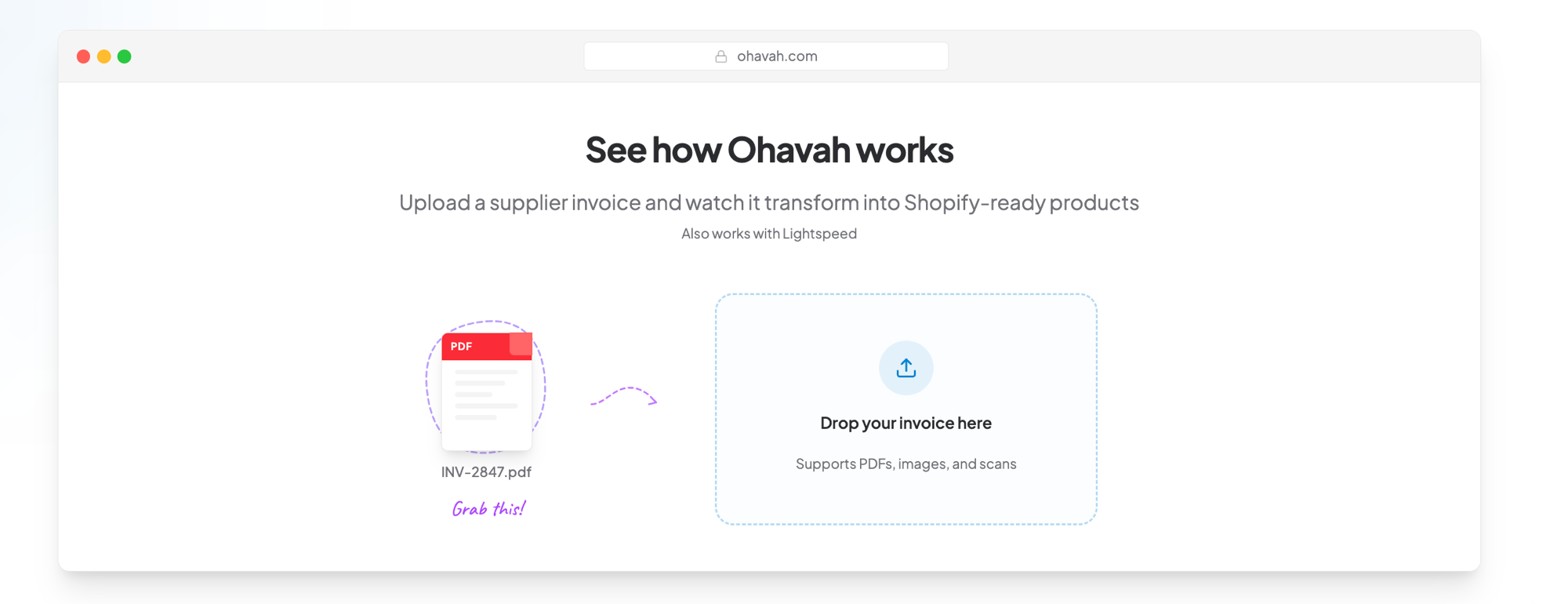
One Shopify job I wouldn't give a general agent at all is getting a whole new delivery onto the site from the supplier's invoice. That's dozens of styles and a couple hundred size-and-color variants, and every SKU, size count, and price has to match the paperwork exactly. A tool made for that one job does it more reliably than a general assistant working it out from scratch each time, which is the job Ohavah does.
Get new deliveries onto Shopify straight from the invoice
Ohavah turns your supplier invoice into ready-to-import Shopify listings, with every size and color, SKUs, pricing, and tags filled in from the order, so a new delivery goes live without retyping it.
 Lacy · Willowmere BoutiqueCalled it “an absolute game changer” for launching her new website.See Lacy’s story →
Keep your storytelling for yourself
My one strong piece of advice is to keep Muse away from your story. Use it for the admin, the research, and the brainstorming, and keep writing the parts of your brand that speak for you.
As a boutique owner, you're the most important part of your brand. Customers don't follow a boutique because it carries a particular label, since two boutiques can sell the same dress and usually do. They follow you, for the way you style a piece, the story about wearing it to your sister's rehearsal dinner, the post admitting you bought way too much of the green, and your taste at market. Nobody can copy any of that, and it's what AI writes worst, because a model writes the most likely version of a sentence, and the most likely boutique caption sounds like every other boutique caption.
There's a practical reason to hold the line, too. Muse is free and it's built by the company that runs Instagram and Facebook, so plenty of boutiques are about to have the same assistant drafting their captions. If yours start sounding like the store across town's, you've handed over the one thing that made people pick you.
In the newsletter post I argued that people will sort their lives into things they're happy to hand to an agent and spaces they'd like to keep free of AI. I'll gladly let an assistant rent my car, and I still want to be the one texting my friends afterward to complain about the car's screen. Your customers will draw the same line. They'll let an agent reorder their shampoo, and they'll still want the voice on your Instagram to belong to a person they could walk in and meet.
So treat Muse like a sharp assistant who's great at prep. Let it outline the week and pull the numbers on what worked. Then write the words yourself, or rewrite its draft until it sounds like something you'd say out loud on the shop floor. Photos and videos of you and your actual racks usually beat polished content anyway, which we got into in why perfect content isn't selling anymore.
Where to start this week
Pick the most tedious thing on your list, which for most owners is the inbox, and give Muse that one job for a week while you read everything it drafts. Add the Instagram and Facebook research the week after, once you trust how it summarizes, and save Shopify edits for last, if you get to them at all.
The hours you get back are worth spending on the work an agent can't do for you, like being on the floor on a Saturday or writing the caption about why you couldn't leave market without that jacket. If you want the longer version of how to keep AI honest about your products, we wrote up the do's and don'ts of using AI in your boutique.
Related next steps
LacyWillowmere BoutiqueCalled it “an absolute game changer” for launching her new website.