How to Run a Holiday Sale Without Training Customers to Wait for Discounts
By Pedro Kroeff ·
TL;DR
A holiday sale brings people in, and it doesn't have to teach your regulars that everything you sell gets cheaper if they hold out. Put a chosen group of pieces on sale instead of the whole store, offer a gift with purchase or early access where you'd normally reach for a percentage off, and keep new arrivals at full price for their first six to eight weeks, whatever the calendar says. Ohavah lists each shipment from the supplier invoice the day it lands, so the full-price weeks you're protecting start on day one.
Turn supplier invoices into products instantly
Skip the manual data entry. Upload a PDF, get ready-to-import products.
The week before Thanksgiving, every inbox your customer owns fills up with 30% off everything, and it's hard to be the one store that says nothing. So you run the sale, the weekend is busy, and the register total looks good. Then a regular who paid $68 for a sweater on the 10th sees it at $47.60 on the 27th, and the next time she falls for something in early November, she remembers.
You can have the busy weekend without that second part. It takes deciding ahead of time what goes on sale, what you offer in place of a discount, and what stays at full price no matter how the weekend is going.
What a storewide sale teaches
Customers learn your patterns quickly, and a holiday sale is the easiest pattern to learn because it comes with a date. If everything in the store was 25% off the last two Thanksgivings, the shopper who loves a coat on November 8th has no reason to buy it on November 8th. We covered the year-round version in why discounting too early hurts your store. The holiday version stings more, because the people most likely to learn the lesson are the ones on your email list who've been paying full price all year.
A storewide sale is also expensive. At a typical 2.2x markup, a $66 top that cost you $30 earns $36 at full price and $19.50 at 25% off, so you'd have to sell nearly twice as many to bank the same gross profit. You take that cut on the pieces that needed help and on the ones that would've sold on Saturday anyway.
Discount a selection instead of the whole store
Choose the sale the way you'd choose a markdown rack. Good candidates are pieces that have had six to eight weeks at full price with a fair effort behind them, broken size runs where you're down to an XS and an XL, and fall styles that won't carry into spring. Leave out anything that arrived in the last month, along with the giftable accessories and bestsellers you're still reordering, since those are what people will pay full price for in December.
A selected sale still gives you something to advertise. "Up to 40% off fall favorites" gets opened, and a deeper cut on fewer pieces clears more inventory than a shallow cut across everything, which also frees up the cash that's tied up in overstock right before your spring orders come due.
In Shopify, build a sale collection and apply the discount to that collection instead of to all products. If the sale pieces share a tag, an automated collection gathers them for you, and anything without the tag stays at full price without you checking product by product.
Give a gift instead of a percentage
A gift with purchase gets someone to buy this weekend without changing the price on a single tag. Set the threshold a little above your average order, so if a typical ticket is $85, the gift comes with orders over $125. A pair of earrings or a candle that costs you $6 is under 5% of that order, where 25% off would've been $31.25, and the customer counts the gift at its retail price. The threshold also nudges a one-piece order toward a second piece that goes with it.
Pick something she'd want to keep or give away, in a quantity you can state truthfully. "Free with the first 60 orders over $125" is a reason to come in Friday morning, and the offer ends on its own when the gifts run out. Online, Shopify's Buy X Get Y discount can make the gift free once a cart reaches the minimum, but the shopper has to add it to the cart herself, so say that on the banner and the gift's product page.
Let your best customers shop first
Early access is the reward that suits your regulars best. The evening before the sale opens to everyone, or the day before a holiday delivery hits the floor, invite your email and text list in for first pick. They get the full size run and the piece that'll be gone by noon, which matters more to a regular than another five percent off, and it costs you nothing in margin.
It works for full-price product as well. A preview night for the party dresses, with no discount at all, is one of the boutique events that drive sales, and it tells your most loyal customers that being on your list means seeing things first. If you're releasing the holiday buy in a few drops, each drop is another early-access invitation you can send.
Keep the full-price window protected
Keep new arrivals at full price for their first six to eight weeks, including when those weeks cross Black Friday. A sweater that landed on November 12th isn't in the sale on the 27th, so the regular who bought it at full price never sees it cheaper two weeks later, and your December deliveries sell at full price through the weeks when people are shopping against a gift deadline.
Give the sale a start and an end, and keep to both. Extending it "by popular demand" tells customers the deadline was never firm, and running a second sale two weeks later tells them to skip the first. Save the season's markdowns for after Christmas, when the holiday pieces won't carry forward and a clearance is what shoppers expect.
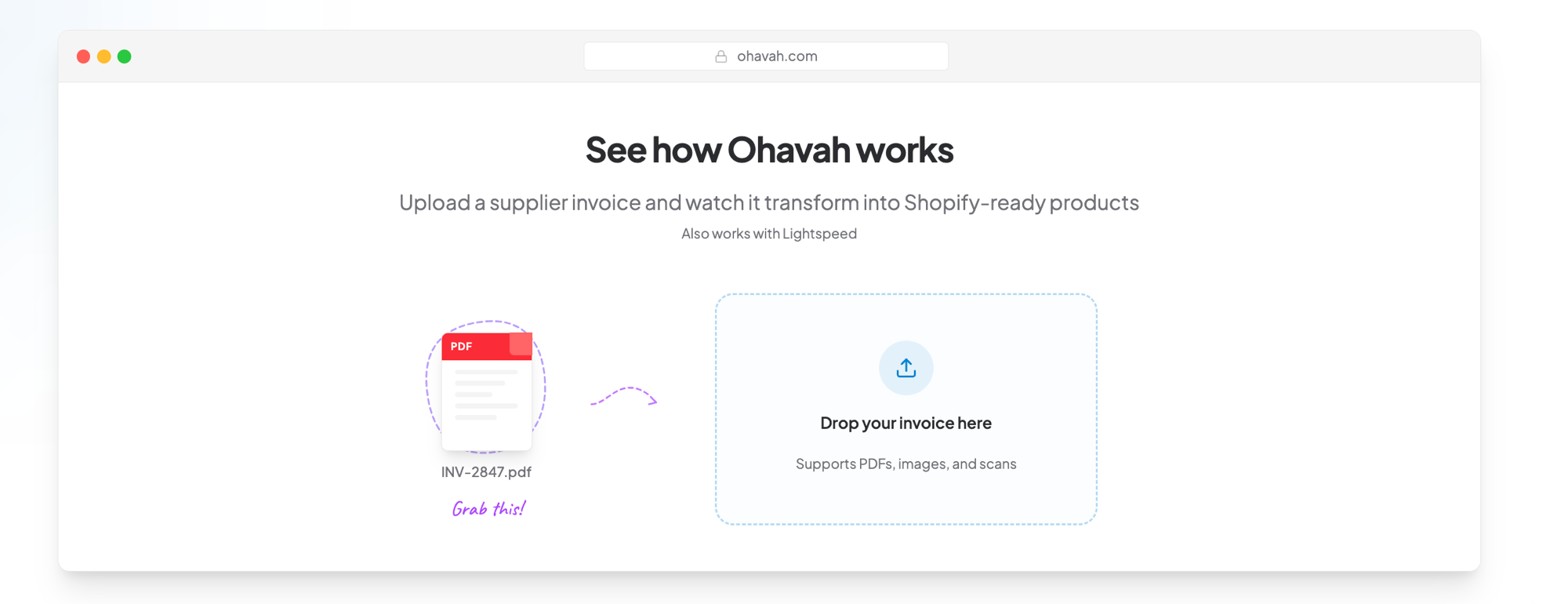
The window only protects you if it starts when the boxes arrive. A shipment that sits unlisted for two weeks has spent a quarter of an eight-week window in the stockroom, which is what new arrivals cost you when they sit in boxes. Upload the supplier invoice and Ohavah turns it into Shopify-ready products with the titles, variants, SKUs and tags filled in, so a delivery can be selling at full price online and on the floor the day it lands, tagged so it's easy to keep out of the sale collection.
Check us out on socials
Boutique owners saving time and having more fun.
Write the rules down before the week starts
Before the sale email goes out, put four things on one page: which pieces are in the sale, the date and time it ends, what the gift is and how many you have, and when your list gets in ahead of everyone else. Share it with whoever's working the floor that weekend, so a customer asking "is this one on sale too?" gets the same answer from everyone.
It also gives your staff an answer for the regular who asks in early November whether she should wait. They can tell her truthfully that the new pieces won't be marked down before Christmas, and she can buy the coat that day.
Try Ohavah free for 7 days and get every holiday delivery listed the day it arrives, so your new arrivals get all of their full-price weeks.
Stop entering products manually
Ohavah turns your supplier invoices into ready-to-import products automatically.