The Hidden Cost of New Arrivals Sitting in Boxes
TL;DR
Every day a new shipment sits unpacked is a day it can't sell, and in a seasonal window those days are the gap between full price and a markdown. The delay is rarely about effort; it's usually one nameable bottleneck: missing photos, incomplete product details, or an approval step waiting on a person. Find the specific holdup and you can fix it. Ohavah clears the biggest one by turning a supplier invoice into ready-to-list Shopify products in minutes, so the boxes become sales while the season is still in front of you.
Turn supplier invoices into products instantly
Skip the manual data entry. Upload a PDF, get ready-to-import products.
You bought the goods, paid the invoice, and waited weeks for the truck. Then the boxes land during your busiest stretch, get stacked in the back, and wait a little longer while you handle the floor, the register, and everything else a small shop needs from you in a day. It's completely understandable. It's also expensive in a way that never shows up as a line on any report.
A box in the stockroom isn't neutral. You've already spent the money, so the only thing that shipment can do now is earn it back, and it can't do that from a shelf no customer can see. The clock on that started the day it arrived.
The selling window is shorter than the box thinks it is
Most boutique inventory has a season, and seasonal goods have a curve. Demand ramps, peaks, and falls off, and the price a customer will pay tracks that curve closely. A sweater that walks out at full price in October is a markdown by January, not because it got worse, but because the window it was made for closed.
That's what makes a delay between delivery and listing so costly. It doesn't just push the sale back a week; it moves the whole shipment down the curve. Ten days lost off the front of the season is ten days you don't get back at the end, when the same pieces are competing with everyone else's clearance. The units that could have sold at keystone in the first week end up marked down in the last, and the margin you planned for leaks out while the goods sit waiting to be photographed.
There's a reason buyers who track sell-through watch the first two weeks so closely. Early full-price sales are what fund the reorder, cover the pieces that won't move, and tell you whether you bought the right thing. A shipment that lists late gives up its best-priced days first, which is exactly the wrong end to lose.
What the boxes actually cost
It helps to put rough numbers on it, because the cost is invisible until you do. Say a shipment landed with 60 units you expected to sell at an average of $48. If listing it a week late means eight of those sell on markdown at $29 instead of full price, that's about $150 gone from one small delay, on one shipment, before you count the customers who came looking and left with nothing.
Now multiply that across a season of deliveries. The individual delays feel minor, a few days here while you catch up, a week there during an event. Added up, they're often the difference between a season you're happy with and one you spend the following month discounting your way out of. The true cost of overstock starts here, with good product that reached the floor too late to sell at the price you bought it to hit.
Name the bottleneck, then fix that one thing
The useful move is to stop treating "we're behind on listing" as one vague problem and figure out where a specific shipment actually gets stuck. When boutiques trace it honestly, the holdup is almost always one of three things.
You're waiting on photos. The product is in, the details are ready, but nothing goes live until there are images, and the photo step keeps sliding because it needs a clear morning, decent light, and a stretch of uninterrupted time you rarely get during a busy season.
The product details aren't ready. You've got the pieces but not the clean version of everything a listing needs: sizes broken out, colors named consistently, prices set with your markup applied, a description that isn't just the vendor's style number. Building that by hand for a 40-line invoice is slow, so it waits for a quiet day that doesn't come.
Something's waiting on a person. A price needs a sign-off, the buyer wants to see it merchandised first, or the one team member who does the listings is out. The work could happen, but a handoff is sitting in someone's inbox or in a decision no one's made yet.
Each of these has a different fix, so the first job is to watch one real shipment from the loading dock to the live listing and mark where the days actually disappear. You can't unblock a bottleneck you haven't located.
If photos are the holdup
The photo step stalls because it's the one part that seems to demand a proper setup: a clean backdrop, a model or a form, and time. For a lot of the brands boutiques carry, though, professional product images already exist, and you don't need to reshoot from scratch to get a listing live. You can pull the brand's own photography for the styles you ordered and have images ready the same day the box lands, then add your own lifestyle shots later when you have the morning for it.
That's the whole idea behind finding product images for your boutique by style number instead of staging a shoot for every arrival. Get it listed with clean images now, and improve the photos later. A live listing with a decent image outsells a perfect one that doesn't exist yet.
If the data entry is the holdup
This is the quiet one, because it doesn't feel like a bottleneck. It feels like work, so it hides in plain sight. Typing 40 lines of an invoice into a spreadsheet, expanding every style into its size and color variants, applying your markup, and formatting it all so it imports cleanly is a couple of hours of careful, error-prone entry per shipment. During a season with a delivery a week, that's most of a day gone every week to retyping numbers a machine could read.
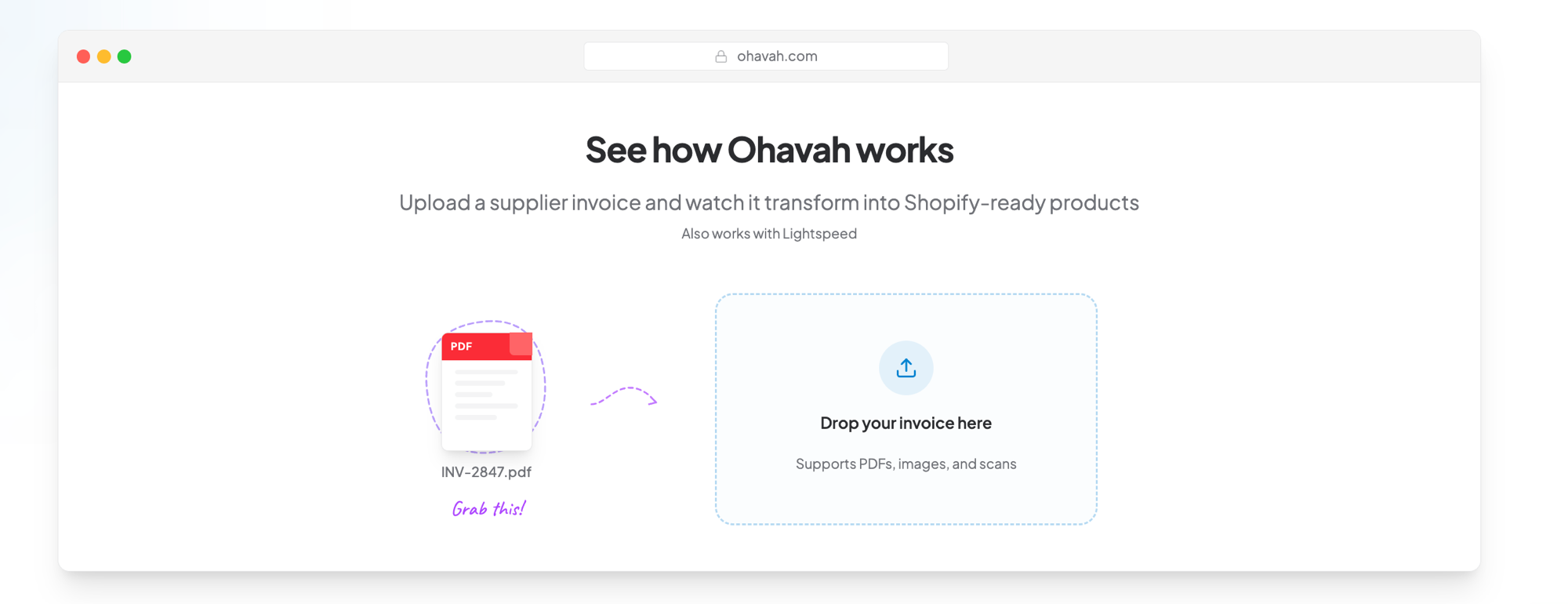
This is where Ohavah earns its keep. Upload the supplier invoice and it reads the line items, expands each style into properly structured variant rows, applies your pricing, and hands back a Shopify-ready file in minutes. What used to gate a listing for a day becomes a short task you can do the afternoon the box arrives.
If a person is the holdup
When the delay is an approval or a handoff, the fix isn't a tool, it's a decision about who can act. Pick one person who's allowed to list a standard shipment without waiting for a second set of eyes, and reserve sign-offs for the genuine exceptions like a new vendor or an unusual price. Most arrivals are routine reorders and seasonal buys you already approved when you wrote the order, so making them wait for a fresh approval is a step that protects nothing and costs days.
If the bottleneck is that one trained person does all the listings, that's worth solving before your next big season, because it means every delivery that lands while they're out is a delivery that doesn't sell. Getting the listing process fast and simple enough that a second person can run it is the kind of thing that pays for itself the first time someone's sick during a delivery week.
Same box, same week, both places
Here's the part that ties a fast stockroom to actual dollars. A shopper sees a new piece on your floor, loves it, doesn't buy it in the moment, and goes home to look it up. If it's not on your site yet because the shipment is still waiting to be listed, your display just sent her to whoever does show up in her search. Your online store is a second location, and it only sells what you've actually listed there.
The goal worth setting is simple: a shipment lands and it's live, in the store and online, the same week. Turning the supplier invoice straight into Shopify listings is what makes that pace realistic instead of aspirational, especially in the weeks when deliveries stack up. Boutiques running this way tell it better than we can, over on our customer stories. Here's Lacy from Willowmere Boutique:
Turn the pile into a plan
If your deliveries tend to bunch up, listing faster is only half the answer; the other half is spreading the work so no single box waits weeks for its turn. Staggered arrivals can become a steady run of small releases instead of a backlog, which is worth planning on purpose when your holiday collection doesn't have to arrive all at once.
Pick your next shipment and time it from the moment it hits the dock to the moment it's live online. Whatever number you get, name the step that ate the most days, and fix that one. It's usually a lot more fixable than the backlog made it feel.
Try Ohavah free for 7 days and turn each new shipment into listed, sellable product the week it arrives, so your best-priced selling days aren't spent in the stockroom.