Before You Tease a New Arrival, Give Shoppers Somewhere to Buy It
TL;DR
A great unboxing reel or a "just in" email creates a spike of demand that fades within hours, and if the product page isn't live, the link is dead, or her size already shows sold out, that demand leaks away instead of turning into sales. Line up the content with a page that's actually ready to buy from, and run a short pre-posting check on the link, the variants, the photos, and the fit details before you hit publish. Ohavah turns each supplier invoice into ready-to-list products in minutes, so the page is live and complete before the post goes out, not scrambled together after it starts trending.
Turn supplier invoices into products instantly
Skip the manual data entry. Upload a PDF, get ready-to-import products.
You film the unboxing the second the shipment lands, because the pieces are gorgeous and the light is good and the energy is real. The reel goes up, it takes off, and comments start rolling in asking "link?" and "is this still available?" So you drop the link, and it points to a collection that doesn't have the item yet, or a product page with no photos, or a listing where the medium she wants already reads sold out because the inventory count never got set. The demand you just created has nowhere to land.
This is where a lot of boutique launches leak. The content does its job and pulls people to the site in a wave, but the page isn't ready to catch them, so the wave breaks on a dead link or a half-built listing and rolls back out. You did the hard, creative part and lost the sale on the mechanical part that nobody sees.
The window between the post and the purchase is short
When someone sees a piece she loves in a reel or an email, the urge to buy is at its peak right then, in the ten seconds after she taps the link. She's not planning to circle back tomorrow to see if the listing got fixed. If the path from "I want that" to "it's in my cart" has a broken step, most people don't troubleshoot it, they just move on, and the ones who meant to come back mostly don't.
This is the same reason getting a shipment listed the day it lands matters so much. The moment of attention and the moment the product is buyable have to line up, because a product that's trending on your social but not live on your site is demand you generated and then dropped. Your online store is your second location, and posting a piece you can't actually sell online is like putting a sign in the window for something that isn't on the shelf yet.
What "ready to buy" actually means
A page is ready when a shopper arriving cold from a reel can go from tap to checkout without hitting a single snag. That's more than the product simply existing in your catalog:
- The link goes straight to the thing. Not to your homepage, not to a broad "New Arrivals" collection she has to dig through, but to the exact product or a tight collection of what you just teased. Every extra tap loses people.
- The variants are live and in stock. Every size and color you showed is set up as a buyable option with its inventory counted, so nothing reads sold out that isn't, and she can actually pick her size.
- The photos are on the page. At least one clear image, and ideally the same look she saw in your content, so the page confirms she's in the right place instead of making her wonder.
- The fit details are there. The stretch, the length, whether it's lined or sheer, what to wear under it. A shopper buying from a reel can't try it on or ask your associate, so the fit answers your best associate gives on the floor need to already be on the page.
- The price and any discount are right. If the post mentioned a launch price or a bundle, the page has to match it, or the mismatch reads as a bait and switch.
None of these are hard on their own. They just all have to be true at the same time, before the post goes out, and that's the part that slips when you're rushing to ride the excitement of a fresh box.
Coordinate the tease with the page
The fix is to treat the content and the page as one launch, not two separate jobs where marketing runs ahead of merchandising. Whatever you're using to build anticipation, point it at something real.
An unboxing video is most effective when the pieces in it are already listed, so the "link in bio" actually works while the reel is hot. A try-on or styling clip should link to the specific looks it features, ideally grouped so a shopper can shop the whole outfit the way she just saw it, which is the same thing that makes sets and layering raise your average order. A "just in" email is a scheduled promise that the collection it links to is live and complete the minute it hits inboxes. Line these up and every bit of hype you build around a new arrival flows straight into a page that's ready to sell.
A quick pre-posting check
Before any new-arrival content goes live, run down a short list. It takes two minutes and it's the difference between a post that converts and one that sends people to a dead end:
- Link: does it open the exact product or collection you're teasing, on both desktop and your phone?
- Variants: is every size and color you showed set up and counted in stock, with nothing falsely sold out?
- Photos: is there at least one clear image on the page, matching what's in your content?
- Fit info: are the stretch, length, coverage, and layering notes written in?
- Price: does the page match any launch price, bundle, or discount you mentioned?
Keep it as a note on your phone or pinned by the register, and make it the last step before you post. A shipment that clears all five is one you can promote hard, because you know the traffic you send has somewhere to go.
Check us out on socials
Boutique owners saving time and having more fun.
List it before you tease it
All of this rests on the product being listed and complete before the content goes out, and that's exactly the step that gets rushed when a box lands the morning you want to post. When listing a shipment means retyping every line item into a spreadsheet, the page is usually the last thing to get finished, so the reel goes up before the products are ready and the timing works backwards.
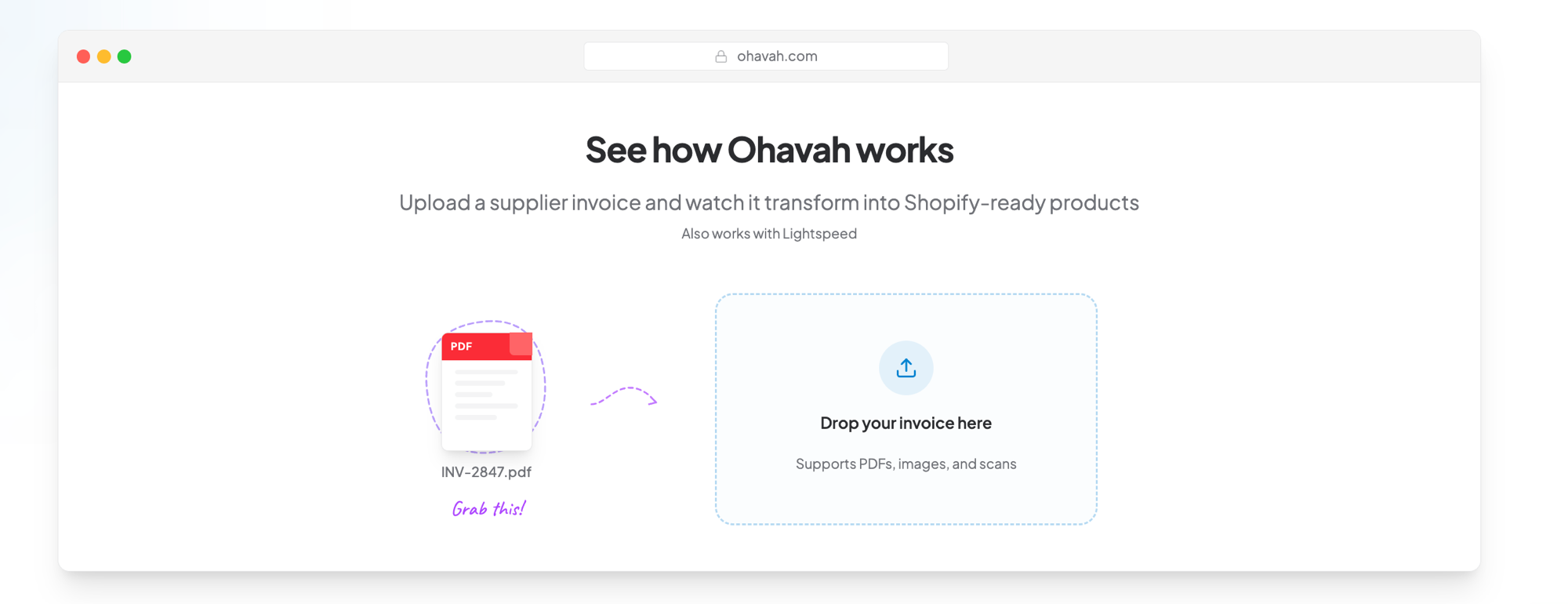
When a delivery arrives, upload the supplier invoice and Ohavah turns it into ready-to-import products in minutes, with variants, prices, and SKUs already built, so the page is live before you ever pick up your phone to film. Getting the listing done first means your unboxing reel, your try-on, and your "just in" email all point at a page that's ready the moment someone taps, so the excitement you work so hard to create actually turns into sales.
The creative work of making people want the piece is the hard part, and you're already good at it. Give that work somewhere to land, and a new arrival goes from a great post to a great launch.
Try Ohavah free for 7 days and turn your supplier invoices into ready-to-list products in minutes, so the page is ready before the post goes out.