Simple Sales Incentives That Actually Work
TL;DR
The incentives that move the needle on a boutique floor are small, frequent, and tied to a behavior your staff can actually control, not a giant annual bonus nobody feels day to day. A quick weekly target, a gift for hitting it, and a shared team goal will do more for your sales than a vague "sell more" ever will, because people push hardest toward a reward that's close, clear, and reachable. The trick is rewarding the right thing, so you're paying for outfits and add-ons rather than encouraging your team to hover and hard-sell. Four principles carry most of the result:
- Keep the cycle short so the goal always feels close
- Reward the behavior you want more of, not just total revenue
- Mix small gifts and bonuses; cash isn't always the strongest pull
- Set team goals, not just individual ones, so the floor helps instead of hoards
Ohavah helps your team sell the incentive that matters most, new arrivals, by getting every fresh shipment listed and shoppable the same day it lands, on the floor and online.
Turn supplier invoices into products instantly
Skip the manual data entry. Upload a PDF, get ready-to-import products.
Picture the incentive most boutiques reach for first, a bonus at the end of the year if the store hits its number. It sounds motivating on paper, and it does almost nothing on a Tuesday in March. The goal is too far away to feel real, one associate's effort on any given shift barely moves it, and by the time the payout arrives, nobody remembers the day they stayed late to build a great outfit. You've spent money on a reward that didn't change a single interaction on the floor.
Now picture the version that works. This week, whoever has the highest units per transaction gets a fifty-dollar gift card and their pick of the new arrivals at cost. Suddenly every associate has a reason to bring the jacket and the earrings into the fitting room today, the goal is close enough to chase, and the effort connects directly to the reward. Same money, wildly different result. The difference between an incentive that works and one that just costs you is almost never the size of the prize; it's how close, how clear, and how controllable you make it.
Why most incentives quietly fail
Three things kill the average retail incentive, and they usually show up together.
The first is distance. A reward that pays out months from now can't compete with the pull of a slow afternoon and a phone in your pocket. There's a well-documented pattern behind this called the goal-gradient effect. People work harder the closer they get to a finish line, and they mostly coast when the line is nowhere in sight. A yearly target keeps the finish line permanently out of view. A weekly one puts it in reach every few days.
The second is vagueness. "Let's have a great month" isn't a goal, it's a mood. If your team can't tell you exactly what number they're chasing and exactly what they get for hitting it, the incentive isn't running. The clearer and more specific the target, the more it pulls.
The third is rewarding the wrong thing. Pay purely on total sales and you'll often get exactly what you incentivized, which is associates who camp on high-ticket customers, ignore browsers, and pressure people toward the biggest possible ring-up. That erodes the trust that brings customers back, and it works against everything you want from a floor that sells with product knowledge instead of pushiness. The fix is to reward the behavior that produces good sales, not just the dollar figure at the end.
Reward the behavior, not only the total
The most useful incentives point at something your team can actually do on any given shift, regardless of who happens to walk in. Total revenue depends heavily on traffic and luck. Units per transaction, attachment of a layer or accessory, or how many new arrivals a person moves are all things an associate controls directly, which makes them far better things to reward.
Tie the prize to units per transaction and you're paying your team to build the whole outfit instead of ringing up one piece, which grows the average sale without a single markdown. Tie it to selling through new arrivals and you're solving the expensive problem of fresh inventory sitting untouched while last season's stock ages. When the incentive rewards the right action, the revenue follows as a byproduct, and you're not training anyone to be a shark to earn it.
Gifts, bonuses, and the things worth trying
Here are incentive structures worth testing on your own floor, and treat them as experiments rather than gospel, since the right mix depends on your team and your margins:
- The weekly UPT contest. Small reward for the highest units per transaction each week. Cheap to run, points straight at outfit selling, and resets often enough that nobody feels out of the race for long.
- Add-on of the week. Pick one category, layers, jewelry, a specific new arrival, and reward the associate who attaches it most. It puts focused attention on the piece you most want to move.
- The new-arrivals push. A bonus or a gift for whoever sells through the most of a fresh shipment in its first week, so the pieces you just paid for don't gather dust while the hype around them is still fresh.
- Gifts over cash, sometimes. A cash bonus disappears into a bank account and gets forgotten. A gift the person actually wanted, a piece from the store, a dinner out, a half-day off, tends to be remembered and talked about, which stretches the same spend further. Cash still has its place for bigger goals; just don't assume it's always the strongest motivator.
- Recognition that costs nothing. Calling out the week's best styling save in front of the team, or a simple whiteboard leaderboard, motivates more than owners expect. People will work hard to be seen doing well, and praise is free.
The point isn't to run all of these at once, which would just confuse the floor. Pick one or two, keep them simple enough that everyone understands the rules instantly, and rotate them before they go stale.
Make the goal a team sport, not a cage match
Individual incentives have an ugly side effect at scale. They can turn a floor into a set of competitors who guard their customers and let the store suffer so their own number looks good. The antidote is to run team goals alongside the individual ones. When the whole store hits a weekly target and everyone shares the reward, your strongest sellers start helping the newer ones instead of freezing them out, because lifting a teammate now lifts the shared payout too.
A blend tends to work best. Keep a small individual incentive to reward personal hustle, and layer a team goal on top so the floor pulls in the same direction. That balance is also how good people stay, because an associate who feels like part of a team that wins together is far more likely to become the kind of long-tenured seller your regulars come back asking for by name.
Incentives only work if there's something to sell
Here's the catch that trips up even a well-designed incentive program. If you're rewarding your team for selling new arrivals, those arrivals have to actually be on the floor and online, priced and tagged and ready, the week they land. For a lot of boutiques that's exactly where it breaks down, because getting a fresh shipment photographed, named, priced, and uploaded takes hours nobody has, so the new stock your team is fired up to sell sits in a back-room box for a week or two while the incentive quietly runs out of fuel.
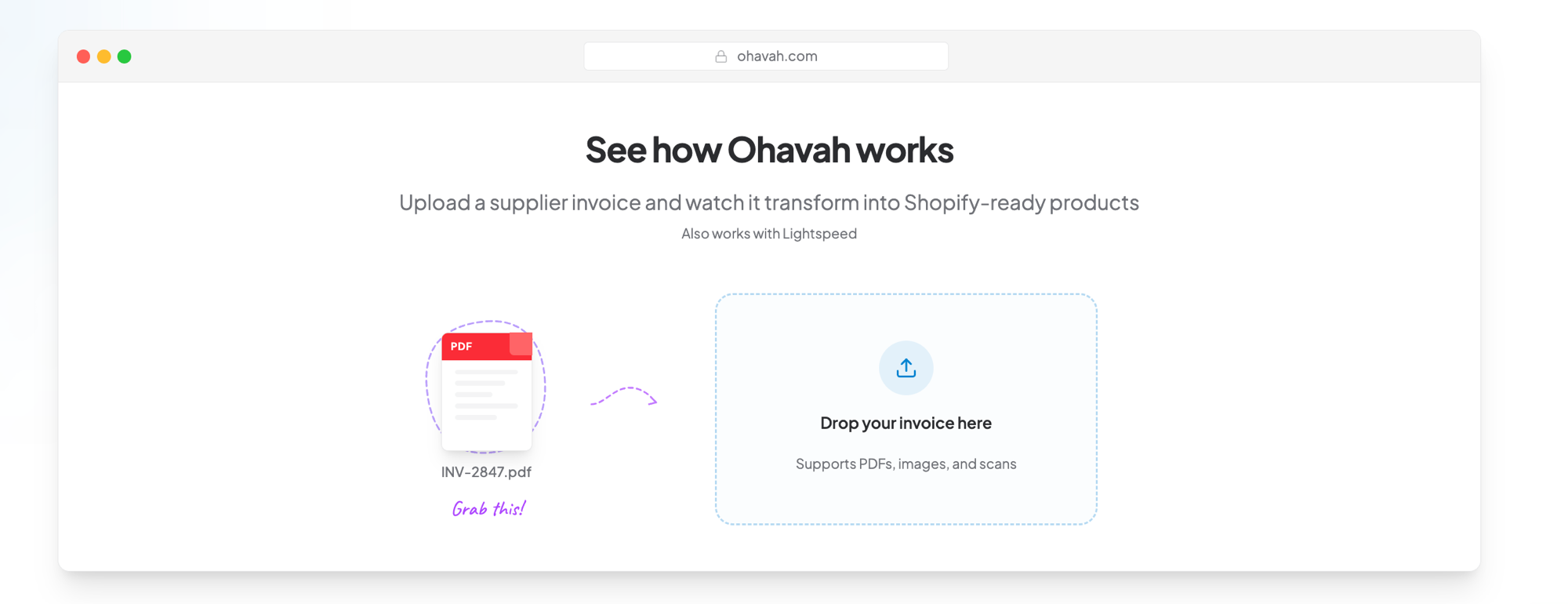
That lag also caps how much your online store can help. Your website is a second location, and every day a new arrival isn't listed there is a day it can't sell to the customer who saw it on the floor and wanted to think about it. Ohavah turns the supplier invoice for a shipment into ready-to-publish Shopify listings in minutes instead of hours, so the arrivals your team is incentivized to sell are live and shoppable the same day they arrive, on the floor and on the website both. An incentive to sell the new stuff works a lot better when the new stuff is actually out there to be sold.
Small, close, and clear beats big and far
You don't need a complicated commission structure or a fat annual bonus to get more out of your team. You need rewards that show up often enough to feel real, that point at behaviors your staff can actually control, and that pull the floor together instead of splitting it apart. Start with one short-cycle incentive tied to units per transaction or new arrivals, add a shared team goal, mix in a gift or two that people will actually remember, and keep the fresh inventory flowing so there's always something worth chasing. Do that, and your sales climb on ordinary weeks, not just the ones with a big sale on the calendar.
Try Ohavah free for 7 days and get every new shipment listed the same day, so the arrivals your team is racing to sell are ready the moment they land.