The Best Ways to Market Slow Seasons
TL;DR
Slow seasons aren't a problem to panic about. They're a rhythm every boutique deals with. The stores that handle them well focus on:
- Loyalty programs that reward repeat customers year-round
- Events and experiences that bring people in without relying on discounts
- Strategic inventory planning so you're not sitting on dead stock
- Using the downtime to prep your online store for the next rush
Ohavah helps you use slow periods productively by making it fast to get your next season's products online and ready before traffic picks back up.
Turn supplier invoices into products instantly
Skip the manual data entry. Upload a PDF, get ready-to-import products.
It's the middle of February. Or maybe it's that weird stretch in late August after back-to-school but before fall really kicks in. The foot traffic has dropped. Your daily sales are half of what they were a month ago. You're staring at the numbers wondering if something's wrong.
Nothing's wrong. It's just slow season.
Every boutique has them. The timing depends on your market, your location, and your customer base, but the pattern is universal. There are months when people are buying and months when they're not. The stores that survive long-term aren't the ones who avoid slow seasons. They're the ones who use them differently.
Don't discount your way through it
The first instinct during a slow month is to run a sale. And sometimes that's appropriate for genuinely seasonal product that won't carry over. But running store-wide promotions just because traffic is down is a trap.
Discounting too early trains your customers to wait for sales. If you run a 20% off sale every time business slows down, your regulars learn the pattern. They stop buying at full price during your good months because they know a sale is coming during the slow ones. You end up undermining your strongest periods to survive your weakest ones.
Instead of cutting prices, focus on strategies that bring people in, build loyalty, and create reasons to buy that don't require giving up margin.
Loyalty programs that actually work
Slow seasons are when loyalty programs earn their keep. Your repeat customers are the ones most likely to shop even when casual browsers aren't coming in. Rewarding them keeps the register ringing during quiet months.
But not all loyalty programs are created equal. A generic "buy 10, get 1 free" punch card doesn't move the needle for a boutique. The programs that work are the ones that create genuine excitement and give customers a reason to engage beyond just accumulating points.
Tiered rewards with real perks. One boutique owner we know runs a program where customers earn points on every purchase. Standard stuff. But the tiers unlock perks that actually matter: early access to new arrivals before they're on the floor, a private shopping appointment with the owner, first pick from the sale rack before markdowns go public. The tiers create a sense of progression that keeps customers coming back.
Experiential rewards. Here's an idea worth stealing. A boutique in the Southeast runs a "Getaway Points" program where accumulated points go toward a paid vacation package. It sounds extravagant, but the math works: the vacation cost is a fraction of the lifetime value of a loyal customer, and the aspirational reward creates a level of engagement that a 10% off coupon never would. Customers talk about it. They track their points. They make extra trips specifically to earn toward the reward. It turns shopping from a transaction into a game with a prize worth playing for.
Birthday and anniversary perks. Simple but effective. A personalized text or email on a customer's birthday with a genuine offer, not a generic coupon code that feels automated. "Happy birthday, Isabella! We set aside the new Elan wrap dress in your size. Come try it on this week and it's 15% off." That feels like a relationship, not a marketing blast.
The point is that loyalty programs work best during slow seasons when you need your existing customers to carry the business. Invest in the program during your strong months so it's already running when things quiet down.
Events and experiences over promotions
When foot traffic drops, create a reason for people to come in that isn't a sale.
Styling workshops. Invite customers to bring a piece from their closet they're stuck on and help them style it with items from your store. It's free, it's personal, it positions you as an expert, and it naturally leads to sales without any discounting. Customers leave with outfit ideas, and half of them buy the pieces you used.
Trunk shows with your brands. Partner with one of your strong brand relationships to host a trunk show during a slow month. The brand sends extra inventory, maybe a rep comes in person, and the event gives your customers early or exclusive access. It creates urgency without a discount and strengthens your vendor relationship at the same time.
Girls' night or VIP shopping events. Close the store on a Thursday evening, add wine and snacks, invite your top 30 customers by name. No promotional angle needed. The exclusivity and the social experience are enough. People buy more when they're having fun with friends than when they're browsing alone on a Tuesday afternoon.
Pop-ups and collaborations. Partner with a local business that isn't a competitor: a jewelry maker, a candle company, a local bakery. A shared pop-up brings their customers into your space and introduces your brand to an audience you wouldn't reach otherwise. Slow months are the perfect time because both businesses have bandwidth to plan and execute.
Community involvement. Sponsor a local team, host a fundraiser, set up a donation bin for a cause your customers care about. These don't directly drive sales, but they build the kind of community goodwill that keeps your boutique top-of-mind when spending picks back up.
Use slow months to fix what's broken
When you're busy, you tolerate friction in your workflow because there's no time to fix it. Slow months are when you address that.
Clean up your online store. Go through your Shopify catalog. Archive products that haven't sold in 90+ days. Update photos on listings that only have one image. Fix product descriptions that are thin or missing. Make sure your tags and collections are organized so customers can actually find what they're looking for. Your online store is your second location, and it deserves the same attention you give your physical space.
Audit your inventory. Which vendors are underperforming? Which categories are overstocked? Use the slow period to make decisions about what you reorder and what you move on from so you're not carrying dead inventory into the next season.
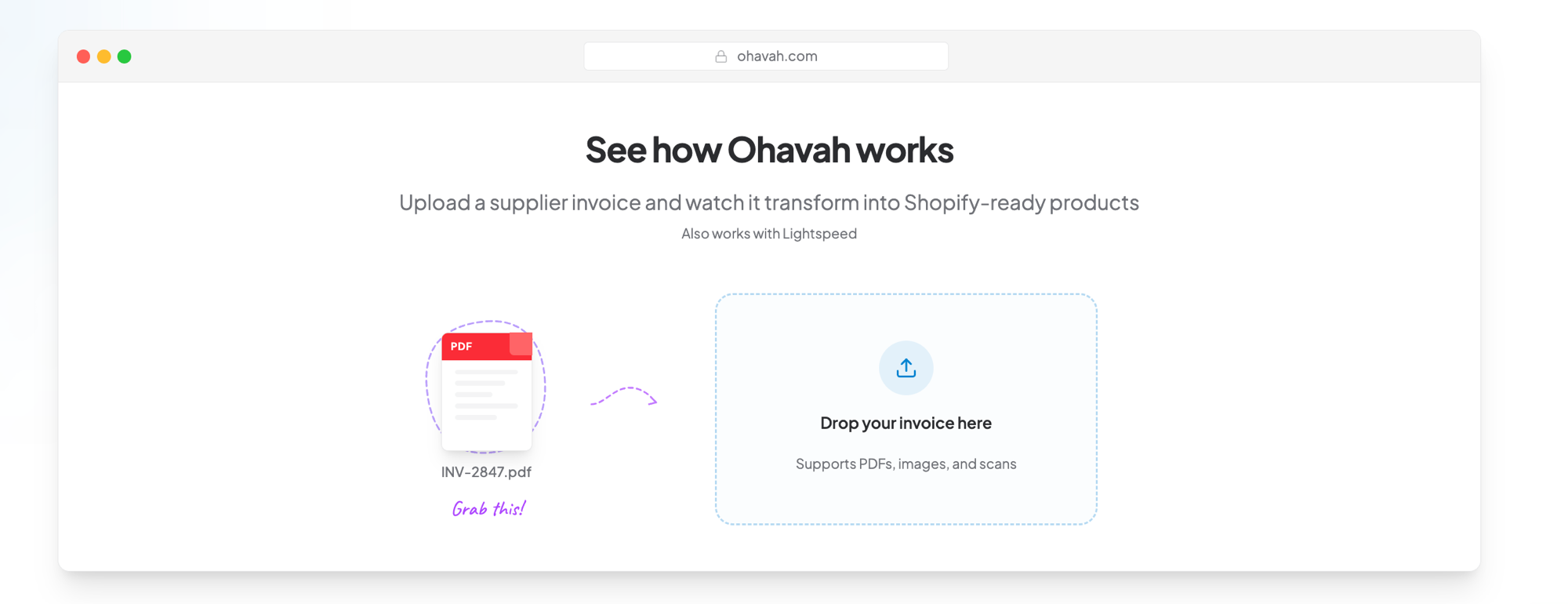
Get ahead on product listings. If you have new season orders arriving in the next month or two, slow time is the perfect window to set up your import workflow. Get your vendor configurations dialed in on Ohavah so that when shipments start arriving, you can turn invoices into Shopify listings in minutes instead of hours. The boutiques that have their new arrivals online on day one of the next busy season are the ones that capture the most demand.
Build your email list. If you don't have one, start. If you do, clean it up and plan your content for the next quarter. Email is the one channel where you own the audience. It doesn't depend on an algorithm, and it consistently drives the highest ROI per dollar spent of any digital marketing channel.
Plan your content calendar for the next peak
Slow seasons are when you should be building the content that sells during busy ones.
Take product photos in advance. Film try-on videos for new arrivals before the rush hits. Write email campaigns for your next collection launch. Build a bank of social posts you can schedule when you're too busy to create in the moment.
If you're shifting toward more authentic, casual content, slow season is when you experiment with the format. Try a few try-on reels. Test different caption styles. See what your audience responds to when the stakes are lower, so you've already dialed in your approach by the time traffic returns.
The mental game
Slow seasons mess with your head more than your bank account.
When business is strong, you feel like you've figured it out. When it slows down, doubt creeps in. Am I carrying the right brands? Is my location working? Should I be doing more online? Are customers going somewhere else?
Usually, none of those things have changed. It's just the cycle.
The boutique owners who handle slow periods well are the ones who expect them and plan for them. They budget knowing that January and August will be lighter. They schedule events during those months. They use the quiet time to work on the business instead of panicking about the business.
And they don't make decisions from a place of fear. Slashing prices, firing staff, or taking on new debt to "get through" a slow month are reactive moves that often create bigger problems. A slow February doesn't require a strategy overhaul. It requires patience and a plan that was set months ago.
A slow-season playbook
- Don't lead with discounts. Protect your margins and your brand. Discount strategically, not reactively.
- Lean on your loyal customers. Activate your loyalty program, send personalized outreach, host exclusive events.
- Create experiences. Styling workshops, trunk shows, VIP nights. Give people a reason to visit that isn't a sale.
- Fix your systems. Clean up your catalog, audit your inventory, set up your workflows for the next rush.
- Get ahead. Use Ohavah to prep your product import workflow so new arrivals are online instantly when the season turns.
- Build your content bank. Shoot and schedule content now so you're not scrambling when things pick up.
Slow months aren't wasted months. They're the months that set up your next strong quarter.
Try Ohavah free for 7 days and use the slow season to get your product workflow ready for the rush.